
日本語
画家川田祐子のニュースレター@No.1
新年の新しい試みとして、今年からニュースレターをはじめることに致しました。2012年から長野に引越しをして早くも5年が経ちました。空気が良く、自然環境にも恵まれて抜群な制作環境です。しかしただ1点、皆様の声を直接伺う機会がとても少なくなりました。今後はより一層、応援して下さる方々と親交を深めながら制作をして行きたいと思っております。ご感想やご質問などございましたら、是非このメールアドレスに返信でお寄せ下さい。お待ちしております。
2017年は、勇気を持って1歩前に出るような活動にして行く所存です。どうぞ引き続き、応援の程よろしくお願い申し上げます。
画家 川田 祐子
【作品詳細】 作品「鳥は見ている」
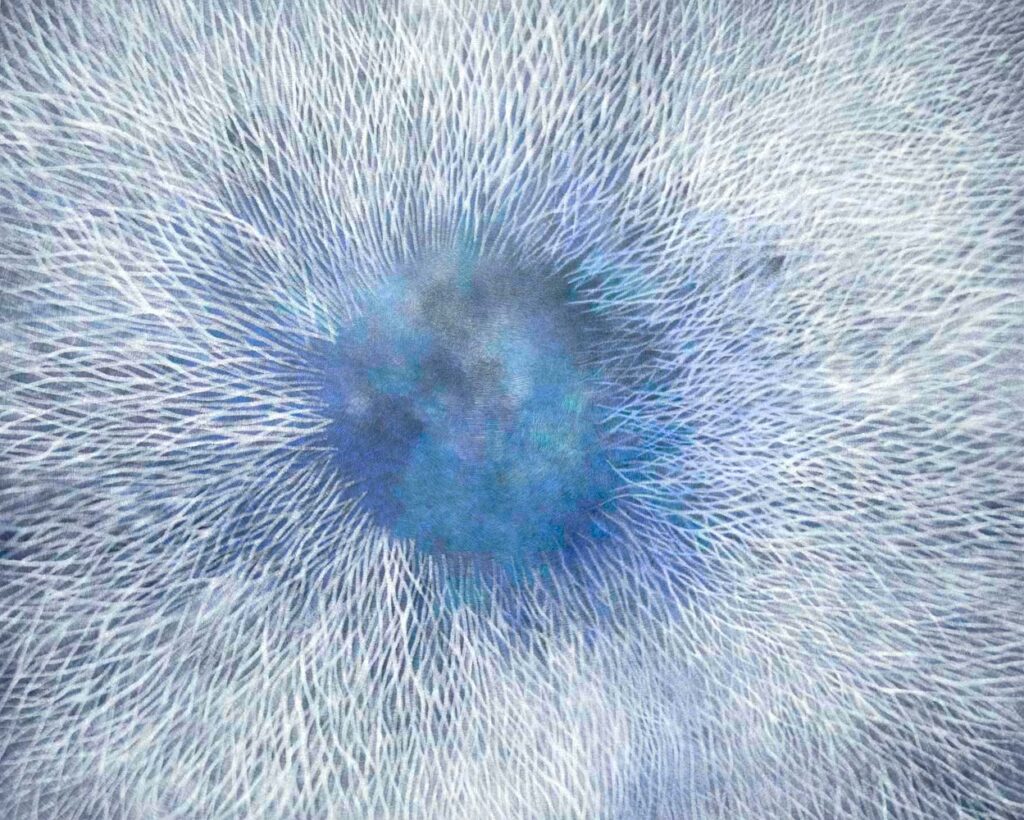
今年は酉年、私の鳥にまつわる作品をご紹介致します。 学生時代、北海道の釧路湿原を一人で歩いている時に、鷲にじっと見下ろされていることに気付いたことがあります。「はっ」としました。鋭く、荘厳な自然の眼差し。「神の目」とはこういうものではないか?と感じた経験でした。
古今東西、鳥は神の使者として見なされて来たようです。実は私の名前の「祐」という漢字にもその意味が込められています。言語学者の白川静氏によると、偏は聖地を示す鳥居。つくりは、飛来する鳥を石に座って見ている巫女の姿を表わし、または何かを口伝えている姿だそうです。
神社には今でも鳥居がありますように、もともと鳥が飛来する聖地に、巫女が待ち構えて、何かの予兆を感じて予言をする場所が神社だったということです。「祐」は、「すけ」とも読むことがありますが、鳥の警告が人間を助けるところから由来するのでしょう。
この作品「鳥は見ている」は、2012年に長野に来てからの作品です。アトリエのある地域は、東西南北沢山の神社に囲まれている場所です。ほぼ毎日のように神社で手を合わせて、制作できることへの感謝をお祈りしています。そして制作するアトリエの南側の窓の外には、無花果、枇杷、杏子などのさまざまな果樹がもともと植えられていて、そこに季節毎の鳥たちが集まって来ます。スズメ、メジロ、オナガ、カッコウ、ジョウビタキ…。鳥たちの声に耳を傾けて制作出来る時が、私のベストなコンディションであり、また至福のひと時です。
この作品は、2014年のクインテット展に出品した折りに新聞に作品画像が取り上げられ、「ミクロな視点に立つ自分を空からマクロな視点で見ているようだ(東京新聞2014年1月31日夕刊美術評論家 中村英樹氏)」と書いて頂きました。私自身が、「人間本位の世界の見え方ではなく、自然環境を意識した鳥の目を持ってもらえれば」という願いを込めて、制作した作品です。しかしまた、そうした意味付けも、その鳥の目とともに一瞬のうちに消え去って、後には白い木立の風景となります。見る人が様々な想いを巡らせて、豊かに色づけしながら、作品を楽しんで頂ければと思っております。
【画家川田祐子自伝】 生い立ち
1962年の6月28日に、私、川田祐子は生まれました。28日は毎年梅雨時に1日だけ晴れるとされる日で、その年も朝から晴れていたそうです。場所は東京の小金井市の赤十字病院近くの小さな産婦人科病院で、母芳枝、父一文の長女として命をさずかりました。
父は結婚を機にそれまで勤めていた私立の高校教員の職を手放して、大学院に通い始めてしまったために、家計はとても厳しい状況だったようです。経済的な基盤はほぼ母方の援助で成り立っていたのが実情のようです。母は、27歳の時に肋膜炎を発症して1年程鎌倉の由比ガ浜のカトリック系の病院に入院し、当時としては少し婚期が遅れ気味であったため、よくわからないままに、お見合いで結婚してしまったと言います。
父のそれまでと母のそれまでを語りますと、それだけで1冊の本が書けそうですので、詳しい事はまた別の機会と致しましょう。
私が物心のついた頃には、家族3人で北鎌倉に住んでおりました。そこは袋谷という地名で、家は急な階段を上った崖っぷちの貸家。空中楼閣のような場所で育った私は、一人で絵を描くという習慣がもうこのころから形成されました。階段が大変だったので、外で友達と遊ぶ機会がめったにありませんでした。
記憶にある友達は2人いて、一人は近所で応接室にピアノがある女の子でした。その応接室には立派な大きな油絵が飾ってありました。しかし、その女の子と遊ぶと、大変な階段を上がって帰らなければならなかったので、めったに会うことは出来ないのでした。もう一人は、たまにひょっこり家に訪れる女の子でした。せっかく訪れてくれる友だちを、しかし母はその女の子を泥棒猫のようにして、いつも追い返してしまうのでした。最初はなぜそのようにするのかわからなかったのですが、たしかにいつも見るその子の身なりが、きちんとしていない、むしろとても汚れているということに段々気付くようになりました。
1960年代は、今の生活と比べて「昭和の古き良き時代」と言われる事もありますが、私の記憶に鮮明に残っていることは、町の至る所に「傷痍軍人」が道端で物乞いをしていたことです。片足を無くし松葉杖でアコーディオンを演奏している軍人、両腕が義手で、道端にその両手をついてお辞儀をずっとしている軍人。父も戦争に行き、大きくえぐりとられたような傷を太腿に持っていましたが、そういう姿を哀れむどころか、むしろ忌み嫌っていたように思われます。戦争の記憶を早く消してしまいたいかのようでした。
「戦後の高度経済成長の時代」は確かに、社会全体が敗戦から復興へと躍起になっていたのかもしれませんが、私の幼いながらの記憶の中には、暗く辛い記憶を早く消したいと、力強く生きていた人々の姿の方が印象に残っています。
母は、家計の助けにと内職をするようになりました。子供用のカーディガンに花柄の刺繍をする仕事です。図案が印刷された薄用紙をピンクのウールのカーディガンの襟元に乗せ、一針一針きれいな色の糸を差し込んでいくのです。私がじっと静かにその姿を見ていると、母は夜なべして私の着る洋服を次々と縫ってくれたのでした。レンガ色とオフホワイトのウール地のリバーシブルポンチョコート、上品な紺色のウールのワンピース。サスペンダー付きのウールのパンツなどなど。しかしそれらは残念ながら全て地味な色合いでした。大人用の生地の端切れを使っていたからだったのでしょう。
人は衣食住で形成されているとも言われます。当時の食生活は?というと残念ながらあまりよく憶えていません。ただ母方の叔母から聞いた話ですが、母の妹が北鎌倉に遊びに来て、姉妹で買い物に行った時のこと。
「お姉さん、マヨネーズ買うならこちらの方がお得よ。この値段でこんなに沢山使えるもの。こちらにしなさいよ。」 「確かにそれはお得だけど、この小さい袋に入っているのを一つしか買えるお金がないの。」 「呆れた。それはお弁当用のじゃない….。」
その高い階段に苦労した北鎌倉時代は、とうとうある日転機を迎えることになりました。大雨で家の裏の崖が崩れたのです。間一髪難を逃れたものの、平地に引っ越そうということになったのでした。(次号につづく)
【Q & A】 作品の設置方法
もう3年前ほどになるでしょうか? 以前作品をご購入頂いた方から、「実は…」という形で最近になって、作品設置に関してのご意見・ご要望を頂きました。これまで20年以上作品を売って参りまして、実ははじめてのご意見でした。よく考えてみれば、大地震を経て作品の設置方法も工夫をする必要がある時代になったのかもしれません。また、もしかしたら作品を買われた方々がおっしゃらないだけで、困っていたり、苦労されているのではないかと思い、ここであらためて設置のノウハウをお知らせする事に致しました。
日本の住宅環境では、以前は壁に釘を打てる人がなかなかいらっしゃいませんでした。しかし最近になって、賃貸住宅でもレールで可動式のフックがついている物件もあったりと少しずつ環境も変わって参りました。しかし、もしご自宅で展示方法に困っている方がいらっしゃいましたら、下記の動画をご参考下さい。またこれだけの情報には当てはまらない場合もあるかと思います。是非遠慮なくご質問を頂ければ幸いです。
【壁の取り付け】
- 石膏ボードに壁付け出来る「壁美人」2枚組1000円くらい: https://youtu.be/BLjpYZvp9jE この場合には、作品裏に紐を取付けする必要があります。もしお手元の作品に紐掛けがしてありませんでしたら、ご連絡下さい。金具(丸環)、紐などをお送り致します。
- 壁にピンで穴が開いてしまった時の対処方法1: https://youtu.be/lzVs2cCtWpY 作品は、20号くらいまでは、ピンを2本平行に壁に打ち付けて、作品を上に載せるだけでも充分強度があります。
- 壁にピンで穴が開いてしまった時の対処方法2: https://youtu.be/25613SC4uLI ピンよりも釘の方がより強度がありますが、壁に穴をあけるのはとても抵抗があるでしょう。しかし、ホームセンターやAmazonで「穴埋め職人」という製品が販売されています。動画などで、どのくらい目立たなくなるかをご確認下さい。
【募集:川田作品をお持ちの方にアンケート】 Q1: 作品を買ったきっかけを教えて下さい。 Q2: 作品をどこに飾っていらっしゃいますか? Q3: 作品がなかった時と飾ってからの違いを教えて下さい。 Q4: これから川田作品を買う方がいるとして、どのようにお勧めして頂けますか? Q5: その他ご要望、ご質問がございましたら、お書き下さい。
アンケートを簡単にメールフォームから返信出来るページをご利用下さい。 http://kawadayuko.jp/pages/qa/
「画家川田祐子のニュースレター」は、
応援して下さる方々に向けて、
毎月5日に手動で配信するメルマガ・サービスです。
次号は2月5日の送信予定です。
English Version
Painter Yuko Kawada’s Newsletter No.1
Greetings
As a new endeavor for the New Year, I have decided to start a newsletter this year. Five years have already passed since I moved to Nagano in 2012. The air is fresh, and surrounded by rich natural beauty, it is an outstanding environment for creative work. However, the one drawback is that I now have far fewer opportunities to hear directly from all of you. Moving forward, I hope to deepen my connection with everyone who supports my work as I continue creating. If you have any impressions, thoughts, or questions, please feel free to reply to this email address. I look forward to hearing from you.
In 2017, I intend to take courageous steps forward in my creative activities. Thank you very much for your continued support.
Painter Yuko Kawada
Artwork Details: “The Bird is Watching”
As this year is the Year of the Rooster, I would like to introduce a work of mine related to birds.
When I was a student, I was walking alone in the Kushiro Marshlands in Hokkaido when I suddenly realized an eagle was staring down at me. It startled me—a sharp, majestic gaze of nature itself. It was an experience where I felt, “Is this what the Eyes of God must feel like?”
Throughout history, birds have been regarded as messengers of the divine. In fact, the kanji character for my name, “祐” (Yuko), carries that very meaning. According to linguist Shizuka Shirakawa, the radical on the left side represents a toriigate designating a sacred site. The component on the right depicts a priestess sitting on a stone watching a bird fly in, or perhaps receiving a divine revelation passed down orally.
Just as Shinto shrines today have torii gates, shrines were originally places where priestesses waited in sacred locations where birds flew in, sensing omens and making prophecies. The character “祐” can also be read as “suke” (meaning to help or save), which likely originates from the idea of human beings being saved by warnings brought by birds.
This piece, “The Bird is Watching,” is a work created after I moved to Nagano in 2012. The area where my studio is located is surrounded by numerous shrines in all four cardinal directions. Almost every day, I offer prayers at a shrine, expressing gratitude for being able to create art. Outside the south window of my studio, various fruit trees—such as fig, loquat, and apricot—were originally planted, attracting seasonal birds. Sparrows, Japanese white-eyes, azure-winged magpies, cuckoos, Daurian redstarts… Listening to the voices of these birds while working creates my best creative condition and brings me moments of pure bliss.
When this piece was exhibited at the “Quintet” exhibition in 2014, an image of the artwork was featured in the newspaper along with a review by art critic Hideki Nakamura: “It feels as though one is looking down at oneself from a macro perspective in the sky, while standing in a micro perspective” (Tokyo Shimbun, January 31, 2014, Evening Edition). My intention in creating this piece was to express a wish that “people might adopt the eye of a bird that is conscious of the natural environment, rather than a human-centric view of the world.” Yet, even such assigned meanings fade away in an instant along with the bird’s gaze, leaving behind a landscape of white thickets. I hope viewers will reflect on their own thoughts and feelings, color the work in their own rich ways, and enjoy the piece.
Autobiography of Painter Yuko Kawada: Early Life
I, Yuko Kawada, was born on June 28, 1962. It is said that June 28th is a day when the sky clears for just one day during the rainy season each year, and that morning was indeed sunny. I was born in a small maternity hospital near the Red Cross Hospital in Koganei, Tokyo, as the eldest daughter of my mother, Yoshie, and my father, Kazufumi.
Upon marriage, my father gave up his position as a teacher at a private high school and decided to enter graduate school. As a result, our household finances were extremely tight. The reality was that our economic foundation relied almost entirely on financial assistance from my mother’s family. At age 27, my mother developed pleurisy and was hospitalized for about a year at a Catholic hospital in Yuigahama, Kamakura. Since her marriage was considered somewhat late for that era, she ended up marrying through an arranged marriage (omiai) without fully knowing what to expect.
If I were to tell the full backstory of my father and mother up to that point, it could fill an entire book, so let us leave those details for another occasion.
By the time I became aware of my surroundings, the three of us were living in Kita-Kamakura. The area was called Fukurogaya, and our home was a rented house perched on the edge of a cliff, accessible only by climbing a steep set of stairs. Growing up in a place that felt like a castle in the air, the habit of drawing pictures by myself was formed during this period. Because the stairs were so arduous, I rarely had opportunities to play outside with friends.
I remember two friends. One was a girl who lived nearby whose house had a grand oil painting hanging in a reception room with a piano. However, playing with her meant climbing those grueling stairs to get back home, so I rarely saw her. The other was a girl who would occasionally drop by our house unexpectedly. Yet, whenever this friend visited, my mother would shush her away like a stray thief. At first, I didn’t understand why my mother acted that way, but I gradually realized that the girl’s clothing was always untidy—or rather, quite dirty.
The 1960s are sometimes referred to as the “good old days of the Showa era” compared to life today, but what remains vividly in my memory is seeing disabled war veterans begging along the roadsides everywhere in town. A veteran who had lost a leg playing an accordion on crutches, or a veteran with prosthetic arms bowing continuously with both artificial hands pressed to the ground. My father had also gone to war and had a deeply gouged wound on his thigh, but rather than feeling pity for such sights, he seemed to detest them. It was as if he wanted to erase the memories of war as quickly as possible.
While the “postwar high economic growth era” was undoubtedly a time when society as a whole was frantically striving to recover from defeat, my own childhood memories are dominated by the impression of people living resilience while trying to quickly put dark and painful memories behind them.
To help with household expenses, my mother started working at home doing piecework. Her job was embroidering floral patterns on children’s cardigans. She would place thin paper with printed designs onto the collar of a pink wool cardigan and thread colorful yarns through it stitch by stitch. As I watched her quietly, my mother would stay up late at night sewing clothes for me one after another—a reversible poncho coat in brick-red and off-white wool, an elegant navy blue wool dress, wool pants with suspenders, and more. Unfortunately, however, they were all in muted tones—likely because she was using leftover scraps of fabric meant for adults.
It is often said that human life is shaped by food, clothing, and shelter. What about our diet at the time? Unfortunately, I don’t remember it very well. However, according to a story I heard from my maternal aunt, my mother’s younger sister once came to visit Kita-Kamakura, and the two sisters went shopping together.
“Sister, if you’re buying mayonnaise, this one is a much better deal. Look how much you get for this price. You should get this one.”
“It certainly is a good deal, but I only have enough money to buy this single small packet.”
“Unbelievable… Isn’t that the kind meant for lunchboxes?”
Our time in Kita-Kamakura, marked by the struggle with those high stairs, eventually reached a turning point one day. Heavy rainfall caused the cliff behind our house to collapse. Having narrowly escaped disaster, we decided to move to flat land. (To be continued in the next issue)
Q & A: How to Install Artworks
It was about three years ago now when a client who had previously purchased a work reached out with feedback and requests regarding artwork installation, starting with “To tell you the truth…” In over 20 years of selling my artwork, this was actually the first time I had received such input. Thinking about it carefully, we may have entered an era where installation methods need to be adapted, especially following major earthquakes. Realizing that other collectors might also be facing difficulties or struggling in silence without saying anything, I decided to share installation tips here.
In Japanese housing environments, it used to be rare for people to be able to drive nails into walls. Recently, however, conditions have been changing, with rental properties offering movable hooks on picture rails. Nevertheless, if you are experiencing difficulty displaying artwork at home, please refer to the videos below. Naturally, there may be cases that fall outside these instructions, so please feel free to reach out with any questions.
【Wall Mounting】
- “Kabe Bijin” (Wall Beauty) mountable on drywall/plasterboard (approx. 1,000 yen for a set of 2):https://youtu.be/BLjpYZvp9jENote: This method requires attaching a hanging cord to the back of the artwork. If your piece does not have a cord installed, please contact me and I will send you the necessary hardware (screw eyes) and cord.
- How to handle small pinholes in the wall (Part 1):https://youtu.be/lzVs2cCtWpYNote: For artworks up to size No. 20 (F20/approx. 727×606mm), driving two parallel pins into the wall and resting the frame directly on top provides sufficient support.
- How to handle small pinholes in the wall (Part 2):https://youtu.be/25613SC4uLINote: Nails offer greater strength than pins, but making holes in walls can be intimidating. However, products like “Aname Shokunin” (Hole Filler) are available at home improvement centers and on Amazon. Please check the video to see how seamlessly it conceals wall holes.
Survey Call: For Owners of Yuko Kawada Artworks
If you own a work by Yuko Kawada, I would be grateful if you could take a moment to answer the following survey:
- Q1: What prompted you to purchase the artwork?
- Q2: Where do you currently display the piece?
- Q3: What changes have you noticed before and after hanging the artwork?
- Q4: How would you recommend Yuko Kawada’s artwork to someone considering a purchase?
- Q5: Please feel free to write any other requests or questions.
▼ You can easily submit your responses via our online form:
http://kawadayuko.jp/pages/qa/
“Painter Yuko Kawada’s Newsletter” is
a monthly newsletter service manually sent
on the 5th of every month
to supporters and patrons.