
日本語
ニュースレター@No.3/News letter No.3-2027-03
まだ雪のかけらが残る庭先に山鳩が訪れるようになって来ました。 ゆるやかな春の訪れのお知らせです。
先月は、制作に希望のようなものが見えて来て、とても良いペースで作品が出来て来るようになってきました。 これも、読者の方々からのお便りや、励ましのご感想などのお陰様です。 購読者もこの1ヶ月で、約10名増えました。 心から感謝して、制作に向かっています。
三寒四温、季節の変わり目、どうぞ皆様も、お変わりなくご活躍下さい。
画家 川田 祐子
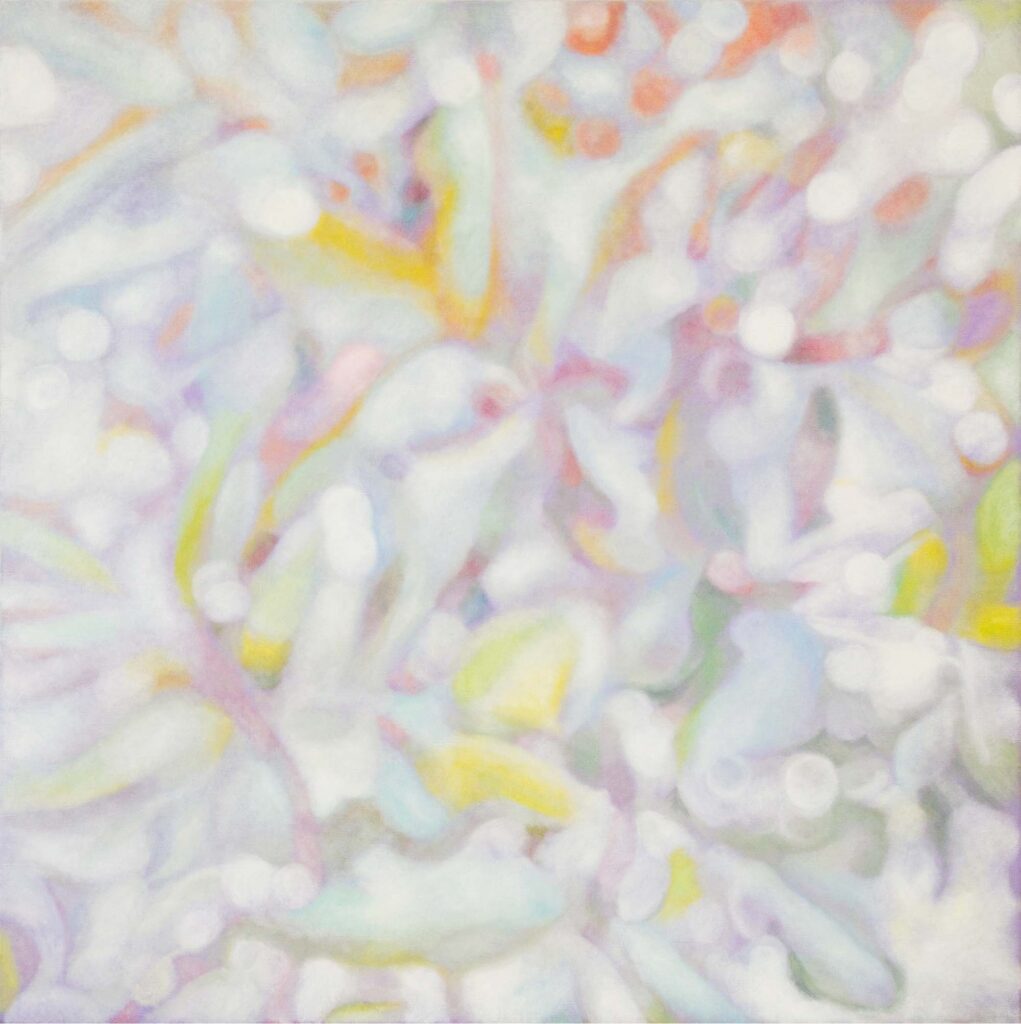
星霜
2016
oil on canvas
65.2×65.2cm
作品「星霜」
長野にアトリエを移してから、早いもので6年目の春を迎えます。 この間に、私自身の生活が変化したために、価値観、ものの見方、考え方、そして作風もかなり変わって来たように感じています。
長野の生活環境は、実は急速に都会化されて来ていまして、アトリエの周囲には、イオンモールやヤマダデンキ、郵便局は3ヶ所、コンビニ3軒、額縁画材店3軒。バスは頻繁に走っていて、市内には県立・市立図書館、県立信濃美術館、長野芸術館、ホクト文化ホールと公共施設が充実しています。また、耳鼻科、歯科、皮膚科、眼科、整骨院、鍼灸院と、病院と美容院が人口の割に多すぎるような気がしてます。どこも待ち時間が短く、10分以内で診察を受けられて、ストレスを感じることがありません。
家のまわりで人の姿をあまり見かけず、静かでもの音一つしないような環境とはとても対照的です。 たまにJR長野駅まで出てみると、そこそこに人は行き交いますが、皆それほど目的意識を持っているような歩き方ではなく、のんびり、ゆっくりと歩いている姿に気付いて、自分の歩調をゆるめ直す程です。
自分の中のリズムをゆっくりにするのは、最初は慣れるまで、とても難しかったのですが、呼吸を整え、深くゆっくり息をして、姿勢を正してみることからはじめると、視野も広がり、冷静になって来て、活力が湧いて来るから不思議です。視野が広がると、それまで気付かなかったことにも目が向いて、空や鳥や花々など自然のあらゆるものごとが、全力で私を制作に導いてくれていることに気付かされます。
私は、自然の手まねきにゆっくり近づくと、心が無邪気になって、時間を忘れて楽しみます。そして、その喜びが、やがて感謝となって、是非この喜びを分かち合いたいと思うようになるのです。それが作品となります。
以前は、まるで蚕が自分で糸を吐きながら、繭という世界をつくって閉じこもっているかのようでした。 作品も、スクラッチやハッチングという技法で、自分の能力や限界に挑戦するようなストイックな作風だったと思います。
長野に来てからは、自分以外の力も信じることができるようになり、いろいろな力にゆだねられるようになりました。自分も他も一緒になって、区別がつかないような感覚です。「自分」という力からも少し解放されて、柔らかく、温かみのある色彩や、自然の光を感じる作風へと変化して来ています。
そのような変化の中から、油彩のボカシ技法を使って、明るい色調の作品が出て来ました。 霜の中にあっても命の息吹が、来るべき活動の時期を待っているように。明るい希望を胸に、静かにゆっくりと長野で制作出来ています。5年という年月(=星霜)、自分の制作活動や住まいの地域の何気ない自然の恵みが交錯して、この「星霜」という作品が生まれたのでした。
画家川田祐子自伝:ひみつの創作と切手
今でも私の眉間には、弓月形の傷がわずかに残っていますが、それは幼い頃に金バケツの縁で切った傷跡です。気を失った幼い娘を心配して、近くの診療所に駆けつけた父は、猛烈に怒って、以降何かと両親に構われ過ぎて過保護に育てられることになってしまいました。私の幼少期は、実は少々窮屈な時代でもありました。
過保護と言えば、幾つか苦笑してしまう思い出があります。
あれは小学2年生の冬のころのことです。ある晩風邪気味で、熱がありました。母が、「明日は、学校を休みなさい」と言います。その次の日に、とても楽しみにしている授業があって、どうしても休むわけには行きません。「明日は、図工でケーキを工作するから、きれいな色の包装紙をランドセルの中にいれておかないと」と、布団から起き上がってみると、フラフラです。母が「そんなことをしていたら熱が下がらないから、用意して入れておくから早く寝なさい」と言います。次の朝、熱が少し下がったので、ふらつきながらも登校しました。
私の顔を見て心配した担任の先生が「熱がありそうだから帰宅しなさい」と、おでこに手をあててくれます。私は、「1時間目の図工の時間が終わったら帰ります」と、ランドセルから材料を取り出しました。すると、材料を見た瞬間に、熱がさらにが〜んと上がって来て、目が回って来たのです(苦笑) なぜそうなったかというと、ランドセルから出て来たのは、三越の赤いまだら模様を器用に切り抜いて細工されたロウソクが数本と、白い綿、スポンジを丸く切った白いショートケーキ用の土台、銀紙、スーパーのチラシから切り取られた苺がいくつも出て来るではありませんか。何も私の創作する余地がない程に、ほとんど出来上がってしまっていたのです。それを見た瞬間に、がっかりして、気分がすっかり落ち込んでしまいました。結局、「気分が悪くてがまんできそうにありません」と言って、すぐに早退したのでした。
それからこれは、小学3年生の夏休みの宿題でのこと。父に「舟の工作」という夏休みの宿題が出たので、「何か材料になるものない?」と聞いてみると、この一言で、父の子供心が突然目覚めてしまったのでした。嫌な予感は的中。父が裏庭の物置小屋に籠り、数日が経ちました。呼ばれて見に行くと、何とそこには竜の頭の彫刻がついた、真っ赤な見たこともないようなりっぱな船。「これは中国のドラゴン・ゴンドラという船だー。どうだすごいだろっ! スクリューを取付けたから、水の上に浮くし、ちゃんと動くぞっ!」とまるで少年のようにはしゃいでいたのでした(汗)。そのような父の幸せを裏切ってはいけないと、子供ながらにそう思って何も言えませんでした。
夏休みが明けて、教室の後ろに夏休みの宿題が並べられました。もちろん、私は「父のために」あの朱塗りの「ドラゴン・ゴンドラ」を持って行ったのです。先生がすぐに私を呼び止めました。「これ自分で作ったの?」私はどう答えて良いかとても困りました。下を向いていると「お父さんと一緒につくったのね。良かったわね」と見過ごしてくれたのでした。私は「自分で作りたかったのに、でもどうしても喜ぶ父の顔を見ると、断れなかった」と今では言えると思うのですが、幼い私には、言葉でうまく表現出来なかったのでした。そして、心の中に、「けっして自分は不器用でも、出来ないわけでもないのに、なぜ私がしたいことをとりあげられてしまうのだろう?」と不満をつのらせていきました。
こういうことが、しかし逆に幸いして、学校の図工以外でも、自分で工作や絵を描くきっかけになって行きました。そして、なるべく人に見られないところで、ひみつでつくる習慣となっていったのでした。
ひみつでつくったものはたくさんあります。何でも小学生の時に一通りのことをしました。和紙人形、ペーパーフラワー、木彫りの仏像、ぬいぐるみ、クロスステッチの刺繍、織物、編み物などなど…。お小遣いは限られていましたが、端材や代替えを工夫するのも好きでした。
そしてこのころに熱中したことがもうひとつ、切手の収集です。はじめは家に届く封筒から切手を切り取って、水を張った洗面器の中に浮かばせると、きれいに剥がせる、そんな楽しみから始まりました。小さい絵の世界には、細かな線が集まっていて、緻密な世界を楽しむことが出来ました。やがて、その姿を見ていた父が、またまた過保護なことに、デパートの「世界の珍しい切手」を売っている場所に連れて行くようになったのです。そこには日本の切手よりも、もっと鮮やかな色彩で彩られているさまざまな切手を見ることができました。
「どれか好きなものを買って上げるよ」と父が言うので私は、バレリーナとひまわりの切手を指差しました。「お嬢さん、これは名画シリーズですよ。バレリーナはドガ、ひまわりはゴッホの代表作です。」店員さんが、説明してくれます。父は帰りの電車の中で、得意げにずっとゴッホの話しをしてくれました。「そんなにかわいそうな人なのに、なぜあんなに明るくきれいなひまわりを描けるのだろう?」とずっと思いながら聞いていたのでした。(次号につづく)
制作の近況
先月号でご紹介した顔料を、ワックス(蜜蝋) や卵テンペラで溶きながら、この1ヶ月は新しい手法に挑戦していました。ワックスはそのままでは弱いので、柔軟性のある天然樹脂ダンマールワニスやテレピンなどを調合して画溶液にします。ワックスは、ロウソクのあの半不透明な魅力ある質感と、熱で溶ける流動的な表現が特徴です。その特徴を生かしながら、自分らしい作品が出来ないかどうか挑戦していました。
卵テンペラは、古典的なハッチング技法のためには、なくてはならない溶剤です。スーパーから一番新鮮な卵を買って来て、画溶液のオイルと顔料を混ぜて絵具をつくりながら描いていきます。これまでアクリル絵具で行って来たハッチングよりも繊細な線で、これをどのように活用して行けばテンペラとしての良さを引き出せるのか、ずっと研究中です。
今月に入ってからは、ダンマールワニスという粘りと光沢のある画溶液と油絵具を混ぜて有色下地をつくってから、カッターやスクレイパーで線状に削って行く新しいスクラッチ技法にも挑戦しています。
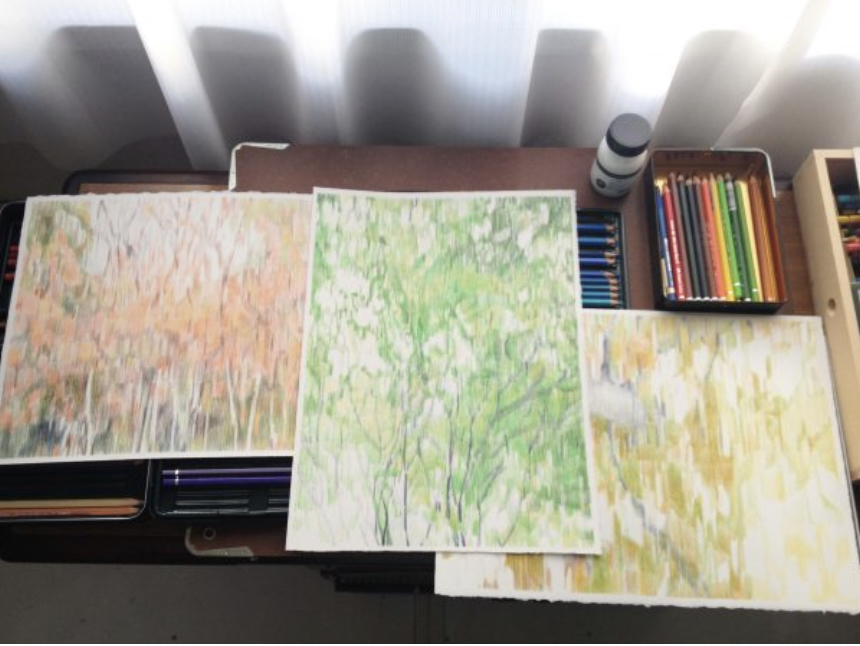
このような制作の中で、どうしても大作に仕上げてみたい、という構想も湧いて来ました。ドローイングも数枚出来上がりました。
お知らせ
大作制作のために、新作やこれまでの作品の一部を、期限を決めて、長野から直販することに致しました。また日頃から応援して下さる方々への、感謝の気持ちを込めた価格に致しました。
個展発表はもう少し先になるかもしれませんが、これから制作する大作は、必ず後世に残る作品になると確信して、全力を尽くす所存です。どうか、作家と支援の輪との共同で芸術文化を残すべく、是非お力添えをお願い致します。
作品は、直接ご覧頂けなければ決められないという方もあるかと思います。作品を直接送って、確認してから決めて頂く方法や、直接お会いして見て頂く方法、長野に春の旅行がてら来て頂いた時に見て頂くなど、柔軟に対応致します。SALE期間は、今月末までです。額装のことなど、何でもお気兼ねなくご質問下さい。作品のご感想だけでも、とても励まされます。
何卒よろしくお願い申し上げます。(かわだゆうこ)
追伸:
今月号は、Q&Aコーナーをお休みさせて頂きました。Q&Aコーナーで取り上げてもらいたいご質問などございましたら、是非ご連絡下さい。
「画家川田祐子のニュースレター」は、
応援して下さる方々に向けて、
毎月5日に手動で配信するメルマガ・サービスです。
次号は4月5日の送信予定です。
YUKO KAWADA Official Site
http://kawadayuko.jp
English version
ニュースレター No.3(「星霜」 / “Seiso – Time and Seasons”)の英訳を作成いたしました。
Painter Yuko Kawada’s Newsletter No.3
Mountain doves have begun visiting the garden, where traces of snow still remain.
It is a gentle announcement of spring’s arrival.
Last month, I began to see a ray of hope in my creative work, and my pieces have been coming together at a wonderful pace.
This is all thanks to the letters and encouraging feedback from you, my readers.
Our subscriber community has also grown by about 10 people over the past month.
I am heading into my studio with deep gratitude in my heart.
During this season of fluctuating temperatures, I wish you all continued health and fulfillment.
Painter Yuko Kawada
Seiso: Frost and Starlight Across Time
2016
oil on canvas
65.2×65.2cm
Artwork : “Seiso: Frost and Starlight Across Time”
The title “Seiso” (星霜) is a poetic Japanese expression for the passage of time, beautifully combining the imagery of glittering stars (sei) in the cold night sky and the delicate white frost (so) that settles with the changing seasons.
It has been six years since I moved my studio to Nagano, and spring is here once again.
Over this time, as my personal life has evolved, I feel my values, perspectives, way of thinking, and artistic style have also transformed significantly.
The living environment in Nagano has actually been urbanizing rapidly. Around my studio, there is an Aeon Mall, a Yamada Denki store, three post offices, three convenience stores, and three art/framing supply shops. Buses run frequently, and the city boasts well-equipped public facilities including prefectural and municipal libraries, the Prefectural Shinano Art Museum, Nagano Arts Council, and Hokuto Cultural Hall. Furthermore, there are clinics for ENT, dentistry, dermatology, ophthalmology, bonesetting, and acupuncture, along with hair salons—so many that it almost seems disproportional to the population. Wait times at all of them are short, allowing me to be seen within 10 minutes without feeling any stress.
This presents a striking contrast to an environment where one rarely sees people and where not a single sound breaks the silence around the house.
When I occasionally visit JR Nagano Station, people pass by in moderate numbers, but none seem to walk with intense purpose; seeing them stroll in a relaxed, unhurried manner reminds me to slow down my own pace.
Slowing down my internal rhythm was quite difficult at first until I got used to it. However, when I started by adjusting my breathing—taking deep, slow breaths and correcting my posture—a strange thing happened: my perspective broadened, I became calm, and new vitality began to surge. As my view expanded, my attention turned toward things I hadn’t noticed before, making me realize that everything in nature—the sky, birds, and flowers—was inviting and guiding me to create with all its strength.
When I slowly approach nature’s beckoning hand, my heart becomes innocent, and I lose track of time enjoying the moment. That joy eventually turns into gratitude, awakening a desire to share this delight with others. That desire becomes my artwork.
In the past, it felt as though I was like a silkworm spinning its own thread, shutting myself inside a cocoon. My artworks back then had a stoic style that challenged my own abilities and limits through techniques like scratching and hatching.
Since coming to Nagano, I have learned to trust forces beyond myself and surrender to various energies. It feels as if myself and others are intertwined without distinction. Released a bit from the force of “self,” my work has shifted toward a softer style filled with warm colors and natural light.
Out of this evolution, bright-toned works created using oil blending techniques began to emerge.
Just as the breath of life waits under the frost for its upcoming season of activity, I am able to create quietly and at my own pace in Nagano, holding bright hope in my heart. Interweaving five years of time (Seiso) with my creative journey and the quiet blessings of nature in my home region, this artwork “Seiso” was born.
Autobiography of Painter Yuko Kawada:
Secret Creations and Stamps
Even today, a faint crescent-shaped scar remains between my eyebrows—a mark from cutting myself on the edge of a metal bucket when I was little. My father, who rushed to a nearby clinic worried about his unconscious young daughter, was furious. From then on, my parents became overly involved, raising me with extreme protection. My childhood was, in truth, a somewhat restrictive time.
Speaking of overprotection, I have several memories that make me smile ruefully.
It was during the winter of my second year in elementary school. One evening, I had a fever from a cold. My mother said, “Rest at home tomorrow”. But the next day, there was a class I was eagerly looking forward to, and I couldn’t bear to miss it. “Tomorrow in art class, we’re making cakes, so I have to put colorful wrapping paper in my backpack,” I said, getting out of bed, feeling lightheaded. My mother told me, “Your fever won’t go down if you do that. I’ll prepare everything for you, so go to sleep now”. The next morning, as my fever had dropped slightly, I staggered off to school.
Seeing my pale face, my concerned homeroom teacher touched my forehead and said, “You look feverish, so you should go home”. I replied, “I’ll go home after the first period of art class,” and pulled out the materials from my backpack. The moment I saw them, my fever shot back up, and the room started spinning. What came out of the backpack was a nearly complete project: candles cleverly cut from Mitsukoshi’s red patterned paper, white cotton, round sponge bases for white shortcakes, aluminum foil, and strawberry cutouts from supermarket flyers. There was almost no room left for my own creativity. The moment I saw it, my spirit fell completely. In the end, I said, “I feel too sick to stay,” and left school early.
Then came an incident during the summer break of my third year. When I was assigned a summer project to “build a boat,” I asked my father, “Do you have any materials I could use?” That single question awakened his inner child. My bad feeling proved right. My father shut himself in the backyard shed for several days. When he called me over, I saw a magnificent red boat featuring a carved dragon’s head—something I had never seen before. “This is a Chinese Dragon Gondola! Isn’t it amazing? I attached a propeller, so it floats on water and actually moves!” he exclaimed, thrilled like a young boy. As a child, I felt I couldn’t betray his happiness, so I stayed silent.
After summer break, the summer projects were lined up at the back of the classroom. Of course, “for my father’s sake,” I brought that vermilion “Dragon Gondola”. The teacher stopped me right away and asked, “Did you make this yourself?” I didn’t know how to answer. As I looked down, she let it pass, saying, “You made it with your father, didn’t you? How nice”. I couldn’t express it in words as a young child, but inside I felt a growing frustration: “I’m not clumsy or incapable, so why is what I want to make always taken away from me?”
However, this ironically worked in my favor, encouraging me to make crafts and draw outside of school art classes. It developed into a habit of creating things in secret, where no one could see.
I made many things in secret. As an elementary student, I tried almost everything: Japanese paper dolls, paper flowers, carved wooden Buddha statues, stuffed animals, cross-stitch embroidery, weaving, and knitting. My allowance was limited, but I loved improvising with scrap materials and substitutes.
Another thing I became passionate about during this period was stamp collecting. It started with the simple fun of cutting stamps off envelopes that arrived at home and floating them in a basin of water to peel them off neatly. Within those tiny miniature worlds, fine lines gathered to form intricate artwork. Seeing my interest, my father—overprotective as always—started taking me to a department store section that sold “Rare Stamps of the World”. There, I saw stamps adorned in far more vibrant colors than Japanese stamps.
“I’ll buy you whichever ones you like,” my father offered. I pointed to stamps featuring a ballerina and sunflowers. “Little girl, these are from the Masterpiece Series. The ballerina is by Degas, and the sunflowers are Van Gogh’s representative work,” the clerk explained. On the train ride home, my father proudly talked about Van Gogh the whole way. Listening to him, I kept wondering: “Why could someone so tragic paint such bright and beautiful sunflowers?” (To be continued in the next issue)
Recent Creative Activity
Throughout the past month, I have been experimenting with new techniques by dissolving the pigments introduced in the last issue using wax (beeswax) and egg tempera. Since wax alone is fragile, I blend it with flexible natural resin like dammar varnish and turpentine to create a medium. Wax features a charming, semi-opaque texture like candlelight and fluid expression when heated. I have been working to harness these qualities to see if I can create works unique to my style.
Egg tempera is an indispensable medium for classic hatching techniques. I buy the freshest eggs from the supermarket and mix the yolk with medium oils and pigments to craft my own paint as I work. It allows for lines far more delicate than the acrylic hatching I used previously, and I am continually researching how to best utilize it to bring out the true qualities of tempera.
Since entering this month, I have also been challenging myself with a new scratching technique. I prepare a colored ground by mixing oil paint with dammar varnish—a sticky, lustrous medium—and then scratch linear patterns into it using cutters or scrapers.
Through these experiments, a strong vision has emerged to complete a large-scale masterwork. Several preliminary drawings have already been completed.
Announcements
To support the creation of this large-scale project, I have decided to offer selected new works and past pieces for direct sale from Nagano for a limited time. Prices have been set with gratitude for those who support my work on a daily basis.
While my next solo exhibition may still be a little ways off, I am confident that the masterwork I am about to create will be a piece that remains for future generations, and I intend to dedicate my full efforts to it. I kindly ask for your support as we work together—artist and supporters—to preserve arts and culture.
I understand some may feel unable to decide without seeing the artwork in person. I am happy to accommodate flexibly, whether by sending the artwork directly for you to view before deciding, meeting in person, or having you view the works while visiting Nagano on a spring trip. The SALE period runs through the end of this month. Please feel free to ask any questions about framing or other details. Simply sharing your impressions of the artwork is also deeply encouraging.
Thank you very much for your continued support. (Yuko Kawada)
P.S.
The Q&A section is taking a break this month. If you have any questions you’d like addressed in future Q&A sections, please feel free to reach out.
“Painter Yuko Kawada’s Newsletter” is a monthly newsletter service manually sent on the 5th of every month to supporters and patrons.
← Return Issue: Newsletter No.2