
日本語
画家川田祐子のニュースレター@No.6
お陰様で、新緑の美しい季節に、軽井沢へと無事引っ越すことが出来ました。
北西に浅間山、北に離山。西に湯川、南に北陸新幹線が通り、その向こうに塩沢湖、東に軽井沢駅から北へと伸びる旧軽銀座。今まで以上に、鳥の声は響き渡り、緑の豊かさからさまざまな啓示を頂きながら、新しい制作へと駆り立てられています。
もし軽井沢にお越しになることがありましたら、是非ご連絡下さい。大したことはできませんが、中軽井沢のアトリエにて、くつろぎの時間をご用意してお待ちしております。
画家 川田 祐子
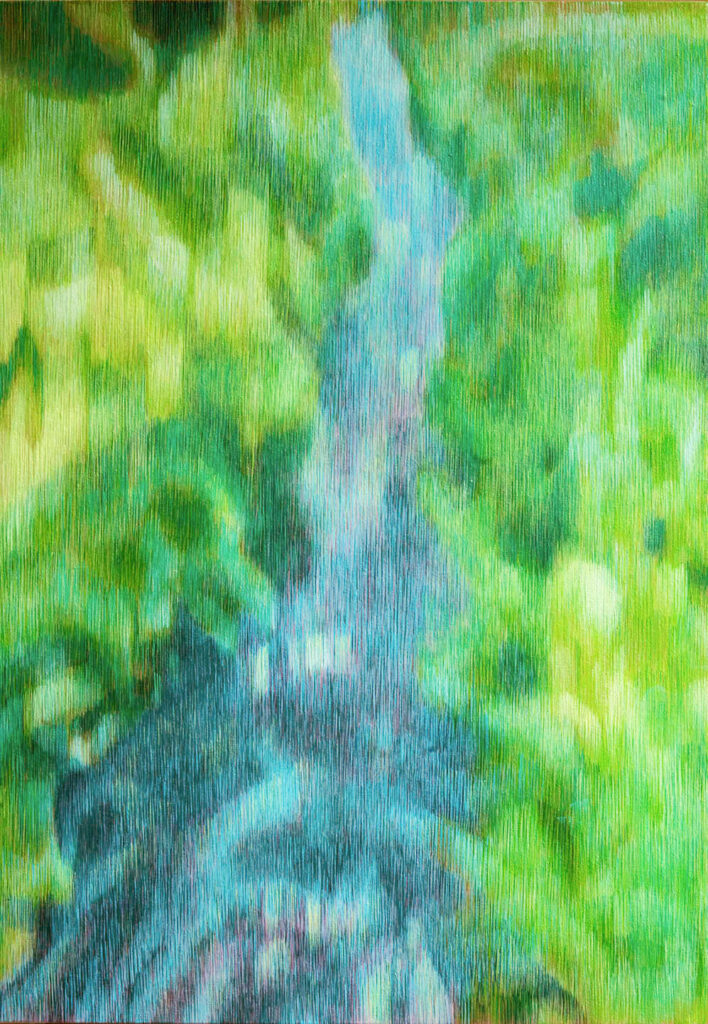
流れゆく
2017
oil and egg tempera on canvas
65.2×45.5cm
作品「流れゆく」
これまで幾度引っ越しをして来たことでしょう。東京小金井で産声をあげて、藤沢 鵠沼→横須賀 長沢→ブレーメン→イザローン→ハンブルグ→横浜 保土ヶ谷→相模原 清新→相模原 中央→相模原 千代田→長野市→軽井沢と、11回目の引っ越しとなりました。流れ流れて、未だ旅の途上のようです。
新居のすぐ近くには、静かで穏やかなせせらぎが流れていることに気付き、毎日のように散策するようになりました。離山の歴史民俗資料館で調べてみると、浅間山を源として、白糸の滝、千ヶ滝、碓氷峠などからの河川を集めながら、観光客で賑わう星野リゾートのハルニレテラスを通るこの流れは、湯川渓流と言われ、縄文時代の生活の跡も発見されているそうです。
よく散策する場所にこの流れがくねくねとそぞろ歩きを同行します。自宅から北陸新幹線の高架下をたどった先の浅間大橋のあたりで一休みし、さらに南に曲がり、湯川ふるさと公園の脇を流れている湯川をたどる道程や、軽井沢町役場の先の長倉神社から郵便局へと向かう道程など、さまざまな所にこの流れを見つけることができます。
野鳥も多く訪れていて、ウグイス、カッコウ、オナガ、そしてキジをよく見かけます。キジは、ケーンと鳴くと言いますが、私の耳には「カケーン」と聞こえます。緑の首に赤い顔に出くわした時は、本当に驚きましたが、大きい割には大人しく、また人の姿に驚くこともなく、ゆうゆうと歩いているのがとても印象的です。夜寝静まった頃に、この「カケーン」という響きが聞こえると、なぜかとても深い森に包まれているような気持ちになります。
湯川渓流のせせらぎに耳を傾けると、さわさわと木の葉を通り抜ける風の音と、川面が岸に倒れかかる木の枝々に触れながら、やがては川底に沈んで泡と消える水音、野鳥のさえずり、カエルの鳴き声。シャーシャーと聞こえて来るのは、ヒメハルゼミでしょうか? さまざまな音が織り重なり合って、緑奥深くへと私を誘います。
この作品は、長倉神社の手前の流れに触発されて描いたものです。長倉神社は思いの外、静かでとても清々しい霊性を感じる場所でした。境内を散策していると、小さな蛇と遭遇。蛇など長らく目にしたことがなかったので、怖いというよりも、むしろ厳かで、神秘的なものを感じたのでした。その時の霊性と、そのような場所を迂回する湯川の流れと、自分自身の人生の摩訶不思議を重ねて、新作制作へと向かいました。とどまることのないせせらぎ…。私自身の命もまた、この身が滅んだ後にもまた、とうとうと次なる命を運ぶ流れへと合流するものなのでしょうか? 深い緑に包まれながら、軽井沢での制作の日々を大切にして行きたいと思っています。
【画家川田祐子自伝】 軽井沢の思い出
川田家は、夏と春によく家族旅行をしました。近くは小田原や箱根、熱海など、遠くは岡山、倉敷にとどまらず、北海道、金沢、四国、京都、飛騨高山、仙台、そして長野、軽井沢へ。当時NHKに『新日本紀行』という番組があって、全国的にも観光旅行ブームがあったように思います。当時国鉄の時刻表を買って、ひとつひとつ駅名を確かめながら、ゆっくりとした長旅を楽しみました。
長野旅行は、私が中学1年生の夏ですから、1979年のことでした。きっかけは、これまたNHKの『大草原の小さな家』という番組の影響で、家族で森の中の丸太小屋で暮らしてみようということになり、浅間山のコテージを5日間借りることになったのです。当時は新幹線が通っていませんでしたので、国鉄の信越本線で高崎を越えて横川駅へ、そこで急勾配をジグザグに電車が上って行く路線でした。高崎と横川の駅をよく覚えているのは、高崎では「だるま弁当」、横川では「峠の釜めし」という駅弁が有名で、どちらを食べるか家族で迷い、結局両方食べ比べをして楽しんだからです。だるま弁当はプラスチックの赤いだるまの容器に入っていて、食べ終わると貯金箱として使えるようになっていました。峠の釜めしは、本当の焼き物のお釜に入っていて、ずっしりと重いものでした。お弁当は、駅に着くと大きな箱を抱えた弁当売りが待ち構えていて、窓からたくさんの手が伸びて、ほんのわずかな停車時間に、次々と手渡しで販売して行くのでした。ちょっぴりスリルがある、今は失われた素朴な楽しみのひとつでした。
おそらく私たち家族は、軽井沢駅前からバスで北軽井沢へと向かったと思います。コテージは想像していたよりも小さな建物でしたが、丸太のログハウスで、中には小さなキッチンコーナーが用意されていて、自炊ができるようになっていました。お風呂やトイレがあったかどうかは記憶に定かではありません。夜はテレビがなく、長い長い夜に、父が即興で作った昔話をして、家族は川の字で眠りにつくのでした。
森の中の朝は早く、コテージに荷物を置いたまま、浅間山の牧場で馬に乗ったり、美味しい牛乳を飲んだりと、家族全員自然の心地よさを満喫しました。次の日には、鬼押出しの博物館を見学したり、そして3日目くらいに朝から「しなの鉄道(※当時の信越本線)」で長野に向かい、善光寺にお参りをし、少し足を伸ばして戸隠まで行ってお蕎麦を食べた記憶があります。そしてとうとう4日目頃には、だんだん何をしたら良いかわからなくなり、夜がもっと長く感じられるようになってきました。
不思議なもので、そういう生活が続くと、帰ったらこうしたいあれをしたいと急に意欲が湧いて来るのでした。母は、どこにも買い物ができないから、帰ったらデパートに行くと言い、父はクラシック音楽を聞きたい、プロ野球の結果が知りたいと言い、妹はテレビが見たいと言い出す始末。私はと言えば、静かで良いけれど、4人がいつも一緒は窮屈で、早く一人になりたいと考えていました。
森のにわか住人は、5泊を終えて、旧軽井沢に降りて行きました。そこでようやく、観光客の集まる軽井沢のにぎわいに触れたのでした。中でも母の目の色が変わり、なかなか駅までたどりつけません。桜の絵柄が彫られた軽井沢彫の家具や、骨董屋の象牙のアクセサリーに釘付けとなって、後ろ髪を引かれる母は、「来年は山の中ではなく、旧軽井沢で過ごしたい」と訴えたのでした。父は、こういう俗世間は、子供の教育上あまりよろしくないという考え方でしたので、母の意見を聞き入れることはなく、そそくさと駅に向かうのでした。
当時の軽井沢駅は、木造のとても小さな駅舎でした。低いホームにたくさんの人たちが東京に向かう電車を待っていました。その中に大学生らしき男女のグループ。麦わら帽子にジーンズ、背中には帆布のリュックの出で立ち。リュックの中には、それぞれ小さなキャンバスが顔をのぞかせ、横に木製の折りたたみイーゼルを差し込み、肩からは絵具箱を下げているのでした。皆楽しそうに、清々しい笑顔です。「私もそのうち絵を描くために軽井沢に来たい」そう眺めていたことがまるで昨日のことのように思い出されます。
その景色は、やがて私にとっての遠い日の憧れ、希望となって行くのですが、当時は家路につくと、淡い夢のように、心の底深くへと沈み、すっかり消えてしまうのでした。それがこうして40年近くなって軽井沢に住むようになってはじめて、「そういえばあの時の夢がこうして実現するものなのだ」と後になって気付くわけですから、私の人生はなかなかまっすぐとは、ままならないようです。
ところで、母はその後自宅に帰ると、さっそく実家の祖母にこの旧軽井沢の町のことを報告したのでした。そこから祖母を誘っての軽井沢の夏の避暑が恒例となって行くのでした。川田家にしても、祖母にしても、軽井沢に別荘を持つ程の豪奢な生活ができるわけではなかったのですが、祖母はすっかり軽井沢に魅了され、つるや旅館のお得意となって、あちこちのお店でショッピングをするのを終生の楽しみとしました。私は、ドイツに留学した頃からは縁遠くなって、軽井沢のことはすっかり忘れておりましたが、母にとっては、軽井沢は実母との夢のような思い出の日々を懐かしむ、大切な場所になっています。
さてしばらく私の記憶からはすっかり忘れられていた軽井沢でしたが、その軽井沢を思い出す出来事が再び、大分後になってからありました。それは1997年頃のことです。当時私は相模原の小さな美術館で『日本の四季』という院展系の日本画を集めた展覧会を企画開催したことがありました。
勤め先の個人美術館の日本画の収蔵コレクションと、神奈川県内の美術館から借用した日本画を集めて、相模原の年配の方々に喜んで頂くような内容の展覧会でした。その中に神奈川県立近代美術館所蔵の堀文子氏の『蓮』などの作品3点があり、その著作権許可を取りつけるために、堀さんに直接お電話でお話をさせて頂きました。教えて頂いた電話番号が、軽井沢の市外局番から始まる番号でした。
明るいはきはきとした若々しい声で、堀さんが電話口に出られて「今軽井沢のアトリエに来ておりますから、そちらの美術館に伺うことが難しいと思いますので、失礼してしまいますが、どうぞ作品写真等ご自由にお使い下さって結構です。よろしくお願いします。」と仰って頂けました。
少し緊張して電話したものですが、「軽井沢のアトリエ」という言葉になぜかとても良い言葉を聞いたような気がして、しばらくボーッと夢心地でいたことを思い出します。堀さんのアトリエが一体どの辺りにあったのか、未だ知る由もありません。しかし奇遇なこととはあるもので、私が2012年に長野市に引っ越しをしてすぐに、長野県立信濃美術館で、『堀文子展』が開催され、あの時お借りした『蓮』の作品が展示されていたことには大変驚き、運命的な出会いを感じたものでした。まだ堀さんはご存命と思います(※当時)が、軽井沢のアトリエはそう長くは使われなかったようで、ほんの4年程の後には、アトリエを都内に移されたということです。
その時から、「軽井沢アトリエ」は、私の大きな夢、希望となっていったのでした。このような少しずつの出来事が、私を軽井沢引っ越しに向かわせたのでした。
(*今回は、引っ越しにちなんで、軽井沢の思い出を取り上げました。次号からは、また元の時間系列に戻ります。つづく)
【引っ越しの経緯】
ある時セゾン現代美術館から長野に帰って来て、何気なくインターネットで中軽井沢をマップでググってみると、そのあたりが「長倉」という地名であることを知りました。そこで「軽井沢 長倉 賃貸物件」と検索してみると、最初にはっきりと「月5万円」という文字が出て来てクリックしたのが、この引っ越しした物件でした。
なかなか面白い間取りで、室内の画像も興味深いものでした。早速、詳細情報に掲載されている問い合わせ先の不動産屋さんに電話してみると、まだ空いているとのこと、「すぐに見学した方が良いですか?」「もう一件問い合わせがありますので、見学は早めをお勧めします」とのこと、その一言で、2日後には「しなの鉄道」で物件見学に行ったのでした。その時点では、まだ冷やかし半分。「まさか軽井沢に月5万円の賃貸物件などありえない」というのが正直な気持ちでした。
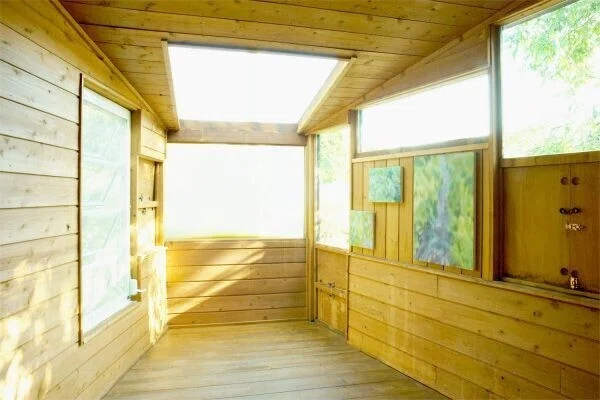
小諸の不動産屋の若い女性の従業員さんが車で現地を案内して下さって、訪れた中軽井沢は、3月下旬というのに、まだ道の端々に雪が残っていました。外は寒かったのですが、中に入ると明るいサンルームの影響か、とてもポカポカと心地よい暖かさでした。築28年の木造でしたが、白い漆喰壁の裾が縦羽目板張りになっていて、サンルームやお風呂の外壁は横羽目板張り。お風呂の内壁は、檜板の羽目板張りのようでした。すっかり気に入ってしまって、その日のうちに内金を支払って、6月1日から入居を予約したのでした。
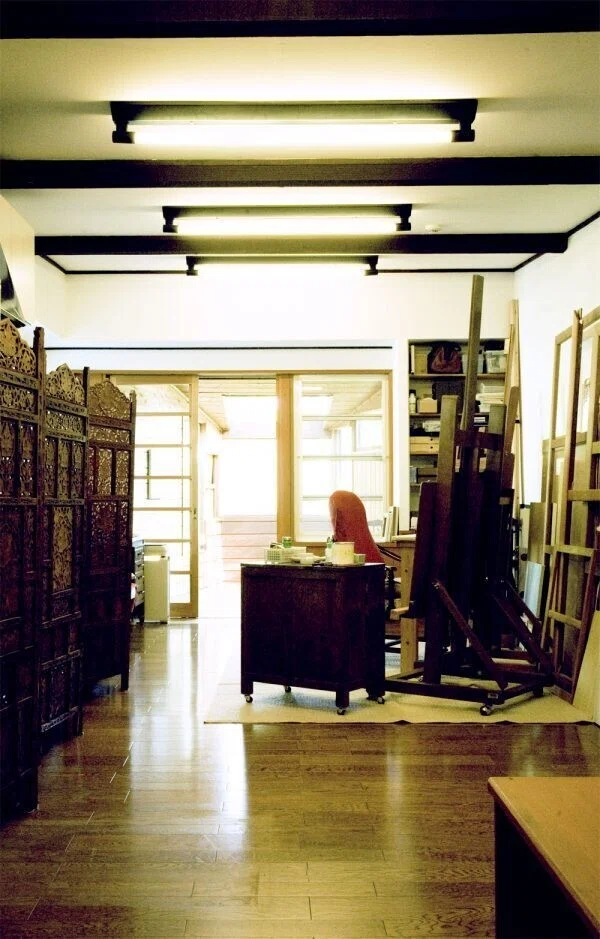
昨日たまたま下の階の大家さんとバッタリお会いしました。ここの大家さんは、軽井沢のあちこちに別荘を建てている工務店の社長さんなのです。「とてもよいお部屋に巡り会えて幸せです」とご挨拶すると、「もともとは、ここを設計事務所のアトリエとして使っていましたので」と仰って、画家がアトリエとして活用することをとても歓迎して下さっているご様子でした。理解ある方に巡り合い、とても幸運です。
【制作の近況】
引っ越して間もなく、新作『流れゆく』そして『緑光』『せせらぎ』と3点を制作する事が出来ました。
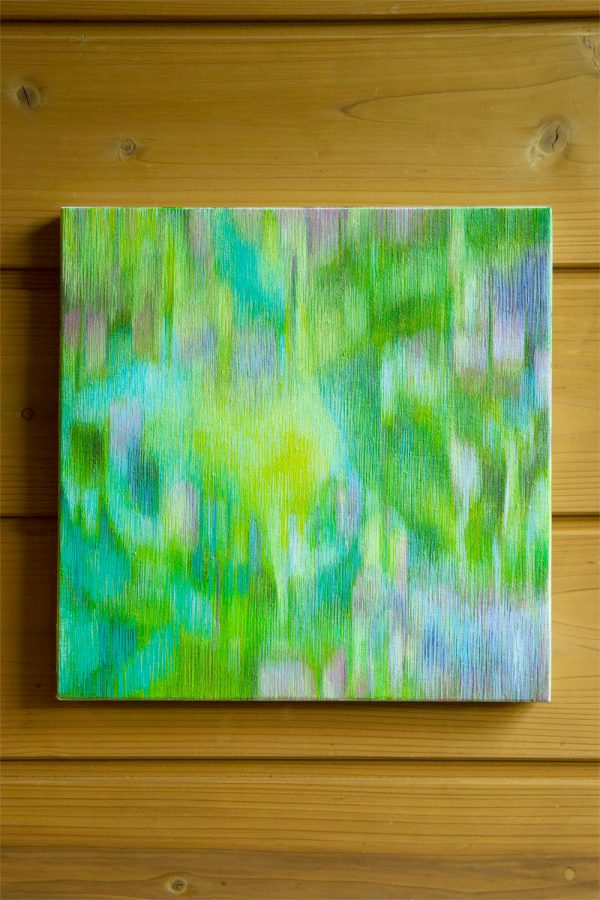
緑光
2017
oil and egg tempera on canvas
27.3×27.3cm
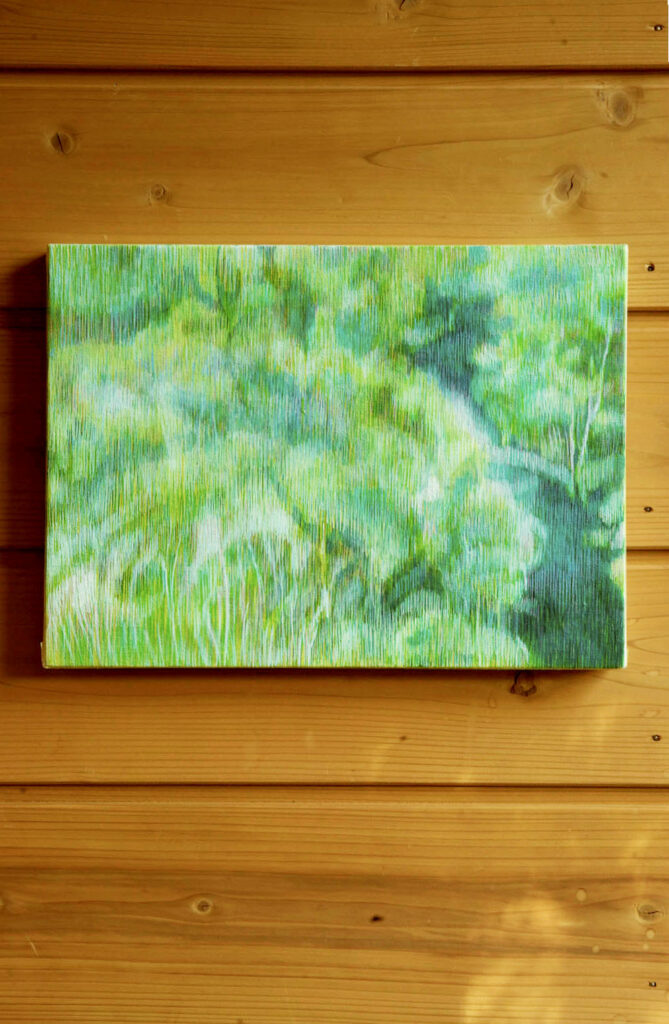
せせらぎ
2017
oil and egg tempera on canvas
24.2×33.3cm
「画家川田祐子のニュースレター」は、
応援して下さる方々に向けて、
毎月20日に手動で配信するメルマガ・サービスです。
次号は7月20日の送信予定です。
YUKO KAWADA Official Site
http://kawadayuko.jp
No.5に戻る
English version
Painter Yuko Kawada’s Newsletter No.6
Thanks to your warm support, I was able to safely complete my move to Karuizawa during this beautiful season of fresh greenery.
To the northwest stands Mount Asama, and to the north, Mount Hanare. The Yugawa River flows to the west, while the Hokuriku Shinkansen passes to the south, leading toward Lake Shiozawa beyond. To the east, Kyu-Karuizawa Ginza stretches northward from Karuizawa Station. Here, birdsong resonates even more vividly than before, and the richness of the surrounding green offers constant revelations, inspiring me toward new creative endeavors.
If you ever happen to visit Karuizawa, please do reach out. While I cannot offer anything grand, I would be delighted to welcome you to my studio in Naka-Karuizawa for a relaxing moment.
Painter Yuko Kawada
Nagare-yuku (Flowing Away)
2017
oil and egg tempera on canvas
65.2 × 45.5 cm
Artwork Details : Nagare-yuku (Flowing Away)
How many times have I moved in my life? Born in Koganei, Tokyo, my path has taken me through Fujisawa Kogane-numa → Yokosuka Nagasawa → Bremen → Iserlohn → Hamburg → Yokohama Hodogaya → Sagamihara Seishin → Sagamihara Chuo → Sagamihara Chiyoda → Nagano City → and now Karuizawa. This marks my 11th relocation. Drifting from place to place, I feel as though I am still in the middle of a journey.
Soon after arriving, I discovered a quiet, gentle stream flowing very close to my new home, and walking along its banks has become a daily routine. Looking into local history at the Mount Hanare Museum of History and Folklore, I learned that this waterway—the Yugawa Mountain Stream—originates from Mount Asama, gathering waters from Shiraito Falls, Sengataki Falls, and Usui Pass. Passing through Harunire Terrace in Hoshino Resort, an area bustling with visitors, it even holds archaeological evidence of life dating back to the Jomon period.
This stream keeps me company on my wandering walks. I often pause for a brief rest near Asama Ohashi Bridge beyond the Shinkansen overpass, follow the Yugawa along Yugawa Furusato Park, or trace its course near Nagakura Shrine past the town hall toward the post office. You can find glimpses of this stream in so many places throughout the area.
Wild birds gather here in abundance—bush warblers, cuckoos, azure-winged magpies, and frequently pheasants. While pheasants are said to cry “keen”, to my ears it sounds more like “ka-keen”. Encounters with their bright red faces and iridescent green necks caught me by surprise at first, yet despite their large size, they walk leisurely without being startled by human presence. When that distinct “ka-keen” echoes late at night when everything has settled, it brings a comforting feeling of being embraced by a deep forest.
Listening closely to the Yugawa stream, I hear a tapestry of sounds: wind rustling through leaves, water murmuring as it touches fallen branches along the banks before sinking into the riverbed to dissolve into bubbles, birdcalls, and the croaking of frogs. The subtle buzzing sound in the air—perhaps Princess Cicadas (Hime-haruzemi)? All these overlapping sounds invite me deeper into the green.
This artwork was inspired by the gentle flow running in front of Nagakura Shrine. Nagakura Shrine turned out to be an unexpectedly quiet sanctuary with a remarkably serene and sacred atmosphere. Strolling through the grounds, I encountered a small snake. Having not seen a snake in a long time, I felt solemnity and mystery rather than fear. Layering that sacred experience with the Yugawa stream winding around such places, alongside the mysterious nature of my own life journey, I set out to create this new piece. An unceasing stream… Will my own life, even after this physical form passes, merge into a broader current carrying life onward? Surrounded by deep green, I wish to cherish every day of creation here in Karuizawa.
Autobiography of Painter Yuko Kawada: Memories of Karuizawa
The Kawada family frequently took family trips in summer and spring. Nearby destinations included Odawara, Hakone, and Atami; further journeys took us to Okayama, Kurashiki, Hokkaido, Kanazawa, Shikoku, Kyoto, Hida-Takayama, Sendai, and eventually Nagano and Karuizawa. During that era, NHK broadcast a program titled Shin Nihon Kiko (New Travelogues of Japan), reflecting a nationwide domestic travel boom. Buying a National Railways timetable, we enjoyed unhurried journeys, checking station names one by one along the route.
Our trip to Nagano took place in the summer of my first year in junior high school—1979. Inspired by another NHK broadcast, Little House on the Prairie, our family decided to try living in a log cabin in the woods, renting a cottage near Mount Asama for five days. Since the Shinkansen did not exist back then, we traveled on the Shin-Etsu Main Line beyond Takasaki to Yokokawa Station, where trains climbed the steep mountain pass along a zigzagging route. I remember Takasaki and Yokokawa stations vividly because both were famous for their station bento boxes—”Daruma Bento” at Takasaki and “Toge no Kamameshi” at Yokokawa. Undecided on which to pick, our family bought both to compare. The Daruma Bento came in a red plastic container shaped like a Daruma doll that could be reused as a coin bank, while Toge no Kamameshi came in a heavy, genuine ceramic pot. At the stations, bento vendors holding large wooden trays waited on the platforms, and numerous hands reached out from train windows to complete quick transactions during brief stops. It was a simple, thrilling joy that has now vanished.
From Karuizawa Station, our family likely took a bus toward Kita-Karuizawa. The log cottage was smaller than expected, equipped with a tiny kitchenette for self-catering. Lacking a television, during the long evenings my father would improvise original bedtime stories, and we would sleep side by side.
Mornings in the woods arrived early. Leaving our luggage at the cottage, we fully enjoyed nature—riding horses at pastures near Mount Asama and drinking fresh milk. The next day, we visited the museum at Onioshidashi, and around the third day, we took a train toward Nagano to visit Zenko-ji Temple and traveled a bit further to Togakushi for buckwheat noodles. By the fourth day, however, we ran out of things to do, and the nights began to feel increasingly long.
Curiously, after staying in such an environment for a few days, an urge to return to normal life suddenly surfaced. My mother complained that she couldn’t shop anywhere and wanted to visit a department store as soon as we got back; my father wanted to listen to classical music and check professional baseball scores; my sister wanted to watch television. As for me, while I appreciated the tranquility, spending every moment packed together with four people felt cramped, and I longed to be on my own.
After five nights, our temporary forest life ended, and we descended to Kyu-Karuizawa, where we encountered the lively atmosphere of tourists. My mother’s eyes lit up, making it difficult to reach the station. Captivated by Karuizawa-bori wood-carved furniture featuring cherry blossom motifs and ivory accessories at antique shops, she reluctantly walked on, pleading: “Next year, I want to stay in Kyu-Karuizawa instead of the mountains!” My father, believing that such worldly commercialism was unhelpful for a child’s education, paid no heed to her request and hurried toward the station.
At the time, Karuizawa Station was a small wooden building. On the low platform, many people waited for trains bound for Tokyo. Among them was a group of college students in straw hats, jeans, and canvas backpacks. Small canvases peeped out from their packs, wooden folding easels were strapped to the sides, and paintboxes hung from their shoulders. They all looked so happy with refreshing smiles. Watching them, I thought: “Someday, I want to come to Karuizawa to paint.” That scene remains as vivid as if it happened yesterday.
That image eventually became a distant longing and hope. Yet back home, like a faint dream, it sank deep into my mind and faded away. Realizing nearly 40 years later, upon moving to Karuizawa, that a dream from back then had actually come true shows how indirect my life path has been.
Upon returning home, my mother reported on Kyu-Karuizawa to my grandmother, which led to annual summer retreats in Karuizawa with her. Although neither our family nor my grandmother was wealthy enough to own a villa, my grandmother became completely enamored with Karuizawa, becoming a frequent guest at Tsuruya Ryokan and enjoying shopping at local stores as a lifelong pleasure. While I grew distant from Karuizawa after studying in Germany, for my mother it remains a cherished place filled with nostalgic memories of her own mother.
Although Karuizawa had faded from my memory for a long time, an event years later brought it back—around 1997. At the time, I curated a Japanese-style painting exhibition titled Four Seasons of Japan at a small museum in Sagamihara.
Combining the museum’s collection with loaned works from museums across Kanagawa Prefecture, the exhibition aimed to bring joy to senior local residents. Among the items were three paintings by Fumiko Hori, including Lotus from The Museum of Modern Art, Kamakura. To secure copyright permission, I spoke with Ms. Hori directly over the phone. The phone number I was given started with a Karuizawa area code.
In a bright, brisk, and youthful voice, Ms. Hori answered: “I am currently at my Karuizawa studio, so it will be difficult for me to visit your museum. Please excuse my absence, but feel free to use the artwork photos as needed.”
Although I felt nervous calling her, the phrase “Karuizawa studio” sounded extraordinarily lovely, leaving me in a dreamy daze for a while. I still do not know where her studio was located, but by a remarkable coincidence, shortly after I moved to Nagano City in 2012, the Nagano Prefectural Shinano Art Museum held a Fumiko Hori Exhibition, featuring the very Lotus painting I had borrowed years before. I felt a deep sense of destiny. Ms. Hori passed away later, but her Karuizawa studio was reportedly used for only about four years before she relocated her studio back to Tokyo.
From that point on, a “Karuizawa studio” became a grand dream and hope for me. These accumulated moments gradually guided my decision to move to Karuizawa.
*(This issue featured memories of Karuizawa to mark the move. Next issue will return to the original chronological narrative. To be continued.)
Background of the Relocation
Returning to Nagano from the Sezon Museum of Modern Art one day, I idly looked up Naka-Karuizawa on Google Maps and noticed the area name “Nagakura”. Searching for “Karuizawa Nagakura rental property,” a listing clearly displaying “50,000 yen/month” appeared first, which I clicked on.
The layout was intriguing, and the interior photos looked promising. Calling the real estate agency listed in the details, I asked if it was still available. The agent replied: “Yes, but we have another inquiry, so we recommend viewing it soon.”Hearing that, I took the Shinano Railway two days later to view the property. At the time, I was half-skeptical, thinking a 50,000 yen rental in Karuizawa was hard to believe.
A young female agent from Komoro drove me to the site in late March, where snow still remained along the roadsides. Inside the 28-year-old wooden house, however, the sunroom made the interior pleasantly warm. The house featured plaster walls with vertical wood paneling along the lower half, horizontal wood siding on the exterior, and cypress paneling inside the bathroom. Liking it immediately, I paid a deposit that day and reserved my move-in date for June 1st.
Yesterday, I happened to meet my downstairs landlord. He is the president of a construction company that builds villas throughout Karuizawa. When I expressed my gratitude for finding such a wonderful space, he mentioned: “Originally, this space was used as an architectural design studio.” He warmly welcomed my use of it as an artist studio. I feel very fortunate to have met such an understanding landlord.
Recent Activity
Shortly after moving in, I was able to complete three new works: Nagare-yuku (Flowing Away), Ryokko (Green Light), and Seseragi (Murmuring Stream).
Ryokko (Green Light)
2017
oil and egg tempera on canvas
27.3×27.3cm
Seseragi (Murmuring Stream)
2017
oil and egg tempera on canvas
24.2×33.3cm
“Painter Yuko Kawada’s Newsletter” is a monthly newsletter service manually sent on the 20th of every month to supporters and patrons.