
日本語
画家川田祐子のニュースレター@No.10
このところ毎日雨が続いています。サンルームで過ごす時間が短くなり、窓の景色もモヤの向こう。ふと窓を見上げると、隣の2階の軒先に働き者のスズメバチたちが飛び回っているではありませんか。私を含め近隣の人たちが気づいた時には、もう直径50cm以上の大きな巣を作りあげていました。しかし、その造形の何と見事なことか、ミラクルの何物でもありません。毎日アトリエの窓からその様子を見上げて、一体どのような巣作りの仕組みがあるのか、なぜそれほどまでに熱心に命を燃やすがごとく雨の中を巣作りに邁進できるのか。蜂に感化されつつ制作に励んでおります。 今年の冬の寒さは厳しいようです。どうぞ皆様、お風邪などひかれませんように、くれぐれもご自愛下さい。
画家 川田 祐子
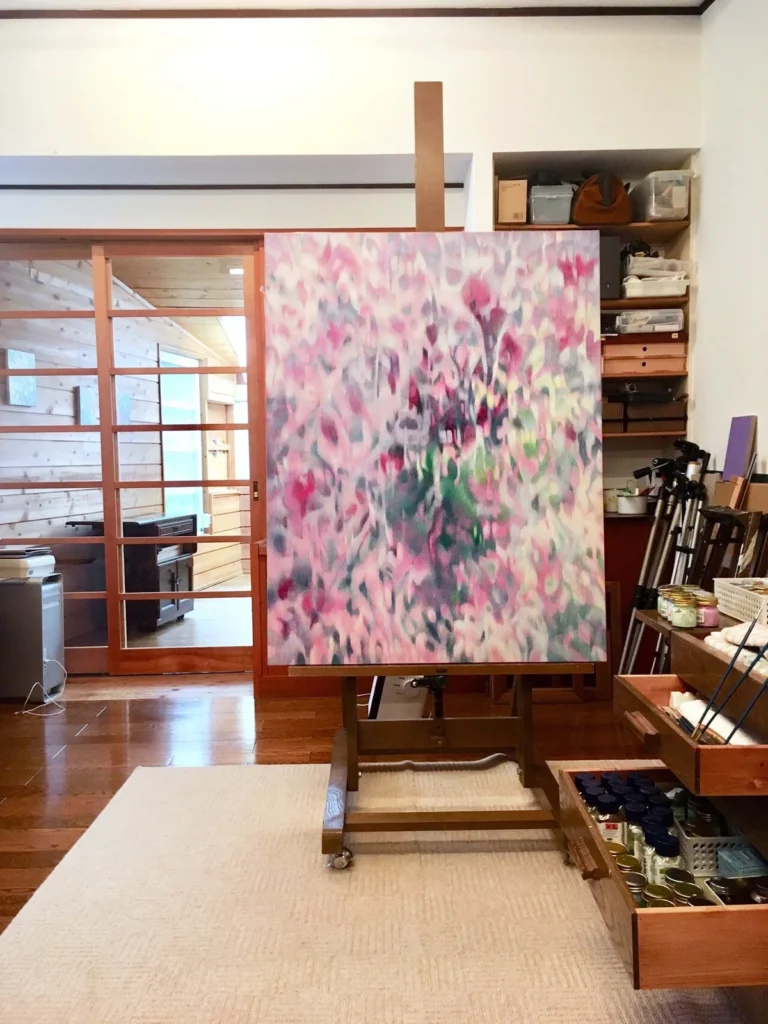
花千片
2017
oil on canvas
91×116.7cm
*この作品は、2024年にアメリカで販売されることになった際に、「A Thousand Pieces of Ice Lantern Flowers」と名称を変更しました。
作品「花千片」制作風景
これまでに「透明」とか「trance」「玲瓏」という言葉を入れた作品タイトルがいくつかあります。 「透明な画面」ということは、ある時は軽やかさとか、明るさ、空間の表現へと響きながら、制作の底流にずっと持ってきたことです。
以前、物理学を研究している人に、直接会いに行って「ガラスはなぜ透明なのですか?」と伺ったことがあります。その人が私にわかりやすく教えるために答えられたことで、私もそうそう明確に覚えているわけではないのですが、その人曰く、 「大げさに言うと、ガラスは、固体と液体の中間にある状態なのです。」と言われたことがとても衝撃的でした。そして「ですから、ガラス窓というのは本当にゆっくりゆっくりと、目に見えないゆっくりさで、下に向かって流れているわけです。」と付け加えられたのでした。
ガラスという物質が、そこにあるという感覚が、いかに流動的で不確かなものであることか、そういうものを私たちが手で触り、目で透明と当たり前のように思って見ていることが、また驚異的なことと、ため息が出るほどです。
「つまり、動いているから透明ということですか?」そんな質問を私はその時したのでした。
翻って、私たちがガラスだけでなく、目の前に様々な物質も、実のところ本当に確実に目で正確にとらえているかというと、ほとんど見ていない、ということと同じことなのではないか、とも思えるのです。おそらくほとんどが、「この物質は記憶にある通りこうあるべきものである」というような見方でしか見ていないのかもしれません。
ものがものとして見えるというのは、大抵が人間の「思い込み」があってこそのことで、この思い込みを取り払ったら、私たちは目もくらむような状態に陥るのかもしれません。
最近の私の作風は、この流れ落ちる、あるいは移り行く流動的な景色を何とかして画面上に作ってみたいという試みです。それがおそらく透明さへの一番の近道と予感するからです。
10月は、数人の方々のご支援によって作品が数点売れて、作品『花千片』に時間をかける勇気を持つことができました。先月号でご紹介した50号の作品です。おかげ様で、透明さを十分に発揮した作品にしようと、じっくり取り組むことが可能となりました。画像は、まだ完成前の制作風景です。
【画家川田祐子自伝】進路ー木箱入りの油絵具
再受験によって入学した高校は、1学年10クラス。クラスは、芸術選択科目によって分かれていて、そのうち半分のクラスが音楽、3クラスが美術、2クラスが書道クラスという構成でした。もちろん美術クラスを選びました。
入学して早々に、大学進路の話が担当教官からあり、「普通大学は東大、芸術系大学は芸大、それ以外の大学に入っても大学に行かないのと同じなのだ」と、かなり極端な話を聞いて、クラスの雰囲気が一瞬張り詰めたことがありました。時代は「受験戦争」という言葉が流行り、誰も彼もが有名大学に行くのが正しいあり方と判断しているようでした。
何か一つのことに集中することで、自分の力を試してみたい、という気持ちは高校再受験以来高まっていて、私の心は、その言葉に少し傾きかけました。その頃、美術クラブから仮入部の誘いがありました。ちょうど美術クラブにするか文芸クラブに入部するかを迷っている時でした。思い切って誘いに乗ってみました。
放課後に美術部の小さな部室を訪ねると、3人くらいの先輩たちが石膏像を囲んで木炭でデッサンをしていました。3人とも3年生で芸大を受けるのだと言っていました。毎年3~5人くらいが芸大に合格しているということでした。
混ざってデッサンをしてみないかと誘われたので、早速食堂から食パンを買って来て、木炭とデッサン用の紙をもらい、部室にあったカルトンにクリップで取り付け、見様見真似でデッサンを始めました。食パンは、耳を外して小さくちぎり、指でこねて消しゴムとして使うのです。
余ったパンの香りが部室いっぱい広がって、お腹がぐうっと鳴るのでした。しかし誰一人しゃべる人もなく、その場の雰囲気は真剣そのもので、ただただ木炭デッサンに集中したのでした。部活を指導している美術教官が後からやって来て、初歩的な指導をした後で帰り際に、「芸大受験を考えているのなら、今の内から鎌倉にある美術研究所に通って準備しなさい」と一言。何か殺伐とした感じがあり、「まだ何も進路は決めていません」と答えて帰宅したのでした。
帰宅後、夕飯時にその話を父に報告して、進路の相談をしようとしたところ、なぜか芸大と美術団体を批判する話にすり変わってしまいました。話のはじめは、自分が武蔵野美術学校時代に、大学にする運動をした話しから始まり、そのために芸大の先生たちに署名を集めて訪ねた話し。芸大に行っても画家になれるわけではないこと、いかに絵を売ることが大変なことで、美術団体に入るために、弟子入りして恩師のモノマネに従事して行くことがくだらないことか、美術研究所で美大受験用のテクニックを教わってしまうと、そのテクニックに酔って、自分のオリジナルな手法、表現が出来なくなること、父が国画会に入選して、懇親会に出席して知った作家たちの貧困生活と破廉恥で堕落した頽廃的な姿などなど。とても娘をそのような仲間の中に入れることは出来ない、話はますます熱を帯びて来て、しまいには「芸大受験など到底許しがたきこと! 絵を描くなどもってのほか!」という結論でした。
次の日に、やはり木炭デッサンの完成が気になって、部室をたずね、一人で黙々と手を動かしてみました。後から先輩が入って来て、「熱心に取り組んでいますね。入部ってことですよね。」と言われて、少し戸惑って「こうしている時間が一番楽しいというだけです」とだけ答えて、うやむやにして、内心は「この1枚を完成したら入部はやめよう」と決めていました。1週間ほどかかって、ダイアナの頭部のデッサンを大体完成させると、教官から講評があって、「川田は芸大を受験しろ」と一方的に言われ、私は困って「芸大受験はしません。文系の大学に進学してOLになるつもりです。美術研究所にも通いません。すみません。」と答えたのでした。
自分が目指した高校には入れたものの、依然とその先が全く見えないままでした。何に自分の情熱を向けたらよいのかわからずに、毎月のように行われる試験、試験、試験。ある時試験が終わった直後に、本当にお腹の底から自分がしたいことをしてみようと思い立ちました。
気がつくと、私は高校の授業をサボって荒崎海岸で海を見ていました。
海の季節は終わり、どんよりとした曇りがちの浜に、人影はありませんでした。
あれほど苦労して高校に再受験して入学したにもかかわらず、何も問題は解決せず、先の見えない自分の人生がこれで良かったのか、わからなくなって行くのでした。
それでも高校生が学生服のままで浜辺に居ては、いかにもエスケープしていることがバレバレです。
そこで私はノートを取り出して、海をスケッチしている体裁をとっさに作りました。しかし、鉛筆と紙では目の前の海をとても捉えられそうにありませんでした。「油絵具とキャンバスがあったなら」とつくづく思いました。あまりに人目が気になって、結局そそくさとバスに乗って市街地に向かいました。
途中で、横須賀の港に停泊している軍船が見えて来て、バスを降りてしばらく歩いていると、画材店が目に入って来ました。ウィンドウには、油絵具とパレットと3本くらい筆の入った木箱セットが飾られています。何よりも木目の美しい木箱が光って見えました。忘れもしません。値段を見ると、2万3千円でした。
ガラス越しに食い入るように見てため息が漏れました。
「今心からしたいことは、この油絵具で絵を描いてみること」そう、心の底から声が聞こえて来ました。
そうそう、私は、お年玉などを貯めて貯金があることを思い出しました。
しかし、そのお金を父が反対することに使えるわけがありません。買っても家では描けません。「それを買えたとしても、美大に進学どころか、画家になるわけでもないのに買っても仕方がない」という別の言葉が、聞こえて来たのでした。
(次号につづく)
【お便りから】
以前から私の作品を数点お買い上げ頂いている、ある女性から、お手紙が届きました。この方は、毎月お手紙でお便りを下さいます。ありがとうございます。
「前回の作品、とても素晴らしく是非購入したかったのですが、同居人にどうしても買ってはいけないと言われ、バトルになったのですが、ダメでした。」
このようなお手紙を実は2〜3回送って下さっていましたから、心から感謝の気持ちとともに、どこか申し訳ないような気がして、恐縮しています。こればかりは私には解決できない問題です。その時は、思いついたことを手紙にしましたので、ここではもう少し整理してお返事と致します。
「前略--これまでに作品を4点買えたこと自体が素晴らしいことです。まずはそのことに感謝です。私はこれまでに100名以上の方々に作品を買ってもらい、老若男女、様々な方達の作品の買い方を見て来ました。作品が買えることには幾つかの条件があるようです。
- 私の作品との出会いー出会えること自体が奇跡です。
- 余裕ーお金、時間、お部屋などの空間的なゆとりが必要です。
- 直感ー自分の感覚が良いと作品を見てすぐに判断できること。
- 家族の理解ー内緒で買っても飾れなければ作品は楽しめません。家族の同意があって、喜びは2倍になります。
- または独立独歩の生き方ー家族の干渉がないとか、独立した生き方が許されている人。
- 迷いがないーお金の使い方、自分の価値観に何らかの信念がある人は、どのくらいの値段のものをどういうタイミングで買うかを常に考えているようで、買う時は何も迷いや悩まず決めることができるようです。
- 日常の文化意識ー美術館や画廊という特別の場所ではなく、また単なる装飾的なものという意識をさらに越えて、日常の身の回りにも文化的なものを置いて生活しようという意識の高さがあってこそ、絵画というものを生活に取り入れることが出来ます。
つまり、絵画を買えるということは、非凡な才能の一つと言えます。これらの条件が整っているということは、おそらく恵まれた生活を送っているということです。
まだ評価の定まらない現代作家の作品を買うことができる、ということ自体がその人が類稀なる人として成功している状態にあることです。そしてそのことに心から感謝した時に、その喜びが循環し、周りに影響が波及するだけでなく、結局自分にその喜びがまた返ってくることになることは、いろいろな経験上知ったことです。この場合、迷いなく「感謝」の気持ちが湧き上がることが鍵のようです。このことはどんな買い物でも同じことです。
10年以上前は男性のお客様が多く、当時このような相談を投げかけて下さるのは男性ばかりでした。それが最近は、女性が増えて来たことを、とても嬉しく感じています。これからは、女性のコレクターが日本の美術コレクター史に残るような予感があります。そういえば、東近美の盛田良子(ソニー創業者の盛田昭夫氏の妻)コレクションにしろ、ニキ・ド・サンファルの日本人コレクターは、Yoko増田静江という女性です。
女性が結婚している場合、自分の自由になるお金を持つことはなかなか難しいことのようです。常に家庭のために自分の要求は控えてしまうからです。
商いでも何でもそうですが、女性が家を守ること、夫を支えるということは、それだけで十分価値があることです。なぜなら妻がいなくなれば、夫は何のために働いているのかすっかりわからなくなるからです。女性が自信を持って自分の価値観を示せることがとても大切です。女性が自分の意思で生きること、自分から他者の束縛を作らないこと。自由意思を自分に許せる生き方が出来るかどうかです。
これは男女の区別などもちろんありません。自分が心から価値を認めたものに、存在も定かでない他人や正しいかどうかも不確かな社会や組織の価値判断を理由に言い訳などして諦めない。そういう生き方を一人一人が心がければ、今後の日本の社会の文化意識が大きく変わることは言うまでもありません。重要なのは、「自分が本当に心から価値を認めたものに囲まれて生活する、それを自ら許せる人間であり続けられるかどうか」です。」
【制作の近況】
『花千片』を透明に表現するために、試作したものが小作品となりました。 Facebookなどで情報をキャッチされた方々が、早々に作品を求めて下さいました。 ありがとうございました。

風華
2017
oil on canvas
22x22cm
SOLD
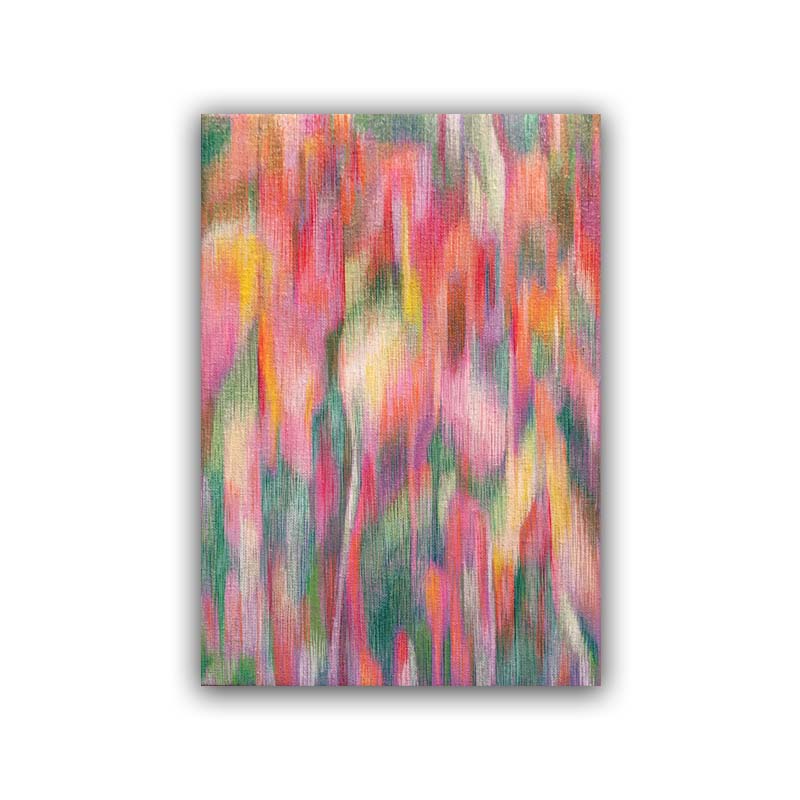
甘い記憶
2017
oil on canvas
22.7×15.8cm
SOLD
「画家川田祐子のニュースレター」は、
応援して下さる方々に向けて、
毎月1回手動で配信するメルマガ・サービスです。
次号は7月20日の送信予定です。
YUKO KAWADA Official Site
http://kawadayuko.jp
English version
Here is the English translation of Yuko Kawada’s Newsletter No.10.
Painter Yuko Kawada’s Newsletter No.10
It has been raining every day lately. My time spent in the sunroom has grown shorter, and the view outside the window remains shrouded in mist. Looking up at the window unexpectedly, I noticed hardworking paper wasps buzzing around the eaves of the neighboring second floor. By the time the neighbors and I noticed, they had already constructed a massive nest over 50 cm in diameter. Yet, its craftsmanship is so remarkable—it is nothing short of a miracle. Everyday, I gaze up at it from my studio window, wondering about the mechanics of their nest-building and how they can drive themselves so passionately through the rain as if burning their very lives away. Inspired by these wasps, I devote myself to my creative work.
This winter’s cold seems severe. Please take good care of yourselves so as not to catch a cold.
Painter Yuko Kawada
Hana Chihen (A Thousand Petals of Flowers)
2017
oil on canvas
91 × 116.7 cm
(Work in Progress Scene)
*When this work was released in the United States in 2024, its title was changed to “A Thousand Pieces of Ice Lantern Flowers.”
Artwork Details : Hana Chihen (A Thousand Petals of Flowers)
I have previously used words like “Transparency,” “Trance,” and “Reiro” (Lucidity) in my artwork titles.
“A transparent canvas” has been an underlying theme throughout my creative practice, resonating at times with lightness, brightness, and the expression of space.
I once visited a physics researcher directly and asked, “Why is glass transparent?” To explain it to me simply, they shared something that left a powerful impression on me (though I don’t recall every detail clearly):
“To put it dramatically, glass exists in a state intermediate between solid and liquid.”
They added, “Therefore, glass windows are flowing downward at an imperceptibly slow pace.”
How fluid and uncertain the presence of glass truly is; that we touch it with our hands and take its transparency for granted through our eyes feels astonishing and breathtaking.
“So, it is transparent because it is moving?” I asked at the time.
Reflecting on this, aren’t we doing something similar not just with glass, but with various objects before our eyes—barely seeing them as they truly are? Perhaps we observe most things merely through the lens of “this object should exist as I remember it.”
That objects appear as distinct things relies mostly on human assumptions; if we were to strip away these assumptions, we might fall into a state of dazzling disorientation.
My recent style is an attempt to create this flowing or shifting, dynamic scenery on the canvas. I sense that this is likely the shortest path toward true transparency.
In October, thanks to the support of several patrons who purchased my works, I gained the courage to dedicate time to Hana Chihen. This is the Size 50 artwork introduced in last month’s issue. Thanks to this support, I was able to take my time working on it, striving to fully express transparency. The image shows the work in progress before completion.
Autobiography of Painter Yuko Kawada: Career Paths — Oil Paints in a Wooden Box
The high school I entered by retaking the entrance exam had ten classes per grade. The classes were divided by elective art subjects: half were music classes, three were art classes, and two were calligraphy classes. Naturally, I chose the art class.
Shortly after admission, our advisor spoke about university career paths, stating: “Standard universities mean Tokyo University, art universities mean Tokyo University of the Arts (Geidai); entering any other school is the same as not going to college at all.” Hearing such extreme words, the atmosphere in the classroom tensed up instantly. It was an era when the phrase “Exam War” was popular, and everyone seemed to consider entering a prestigious university as the only correct path.
My desire to test my capabilities by concentrating on a single goal had grown since retaking the entrance exam, and my heart leaned slightly toward those words. Around that time, I received an invitation for a trial membership from the art club. Just as I was wavering between joining the art club or the literature club, I decided to take the leap.
Visiting the small art club room after school, three senior students were seated around a plaster statue, drawing with charcoal. All three were third-years planning to take exams for Geidai. They mentioned that about three to five students passed the Geidai exams every year.
Invited to try drawing alongside them, I bought white bread from the cafeteria, received charcoal and drawing paper, clipped it to a wooden board (carton) in the room, and began drawing by imitation. Removing the crusts, I tore the bread into small pieces, kneading them with my fingers to use as an eraser.
The aroma of leftover bread filled the room, making my stomach rumble loudly. Yet no one spoke; the atmosphere was pure intensity as everyone focused single-mindedly on charcoal drawing. The art instructor supervising the club arrived later, offered basic guidance, and remarked upon leaving: “If you’re considering Geidai exams, start attending the art institute in Kamakura to prepare now.” Sensing something cold and transactional, I replied, “I haven’t decided on my path yet,” and went home.
At dinner that evening, when I reported the conversation to my father to consult on my future, the discussion strangely shifted into a critique of Geidai and art associations. It began with his own student days at Musashino Art School, campaigning to elevate it to university status, gathering signatures from Geidai professors. He argued that attending Geidai doesn’t guarantee becoming a painter, how difficult it is to sell art, how foolish it is to become an apprentice copying a master’s style just to join an art association, and how art institute techniques make students intoxicated with tricks, losing their original voice. He recounted attending a gathering after being accepted into the Kokuga-kai exhibition, witnessing artists’ impoverished lives and decadent, scandalous behavior. He declared he could never place his daughter among such company, his speech growing increasingly heated until concluding: “Taking Geidai exams is utterly unacceptable! Painting pictures is out of the question!”
The next day, curious about finishing the charcoal drawing, I visited the club room again and worked quietly alone. A senior student came in later and remarked, “You’re working so earnestly. That means you’re joining, right?” Flustered, I replied, “I just find this time the most enjoyable,” leaving it vague while inwardly resolving to quit once this single piece was finished. After about a week, when I completed the bust drawing of Diana, the advisor offered a critique and unilaterally announced, “Kawada, you should take the Geidai exam.” Troubled, I answered, “I won’t take Geidai exams. I plan to attend a humanities university and become an office worker. I won’t attend an art institute either. I’m sorry.”
Although I had entered the high school I aimed for, my path ahead remained completely invisible. Not knowing where to direct my passion, I faced month after month of endless examinations. One day, right after an exam ended, I decided to do what I truly wished to do from the bottom of my heart.
Before I knew it, I was skipping class, looking at the ocean at Arazaki Coast.
The beach season had ended, and there was not a soul on the overcast shore.
Despite all the hardship of retaking the entrance exam to get into high school, nothing had been resolved, and I grew increasingly lost, wondering if this directionless life was truly right.
Still, a high school student standing on the beach in a uniform made it glaringly obvious that I was skipping school.
Quickly, I pulled out a notebook and pretended to sketch the sea. Yet pencil and paper could hardly capture the ocean before me. “If only I had oil paints and a canvas,” I thought deeply. Conscious of onlookers, I hurried onto a bus heading toward the city center.
En route, military ships docked at Yokosuka Port came into view. Stepping off the bus and walking for a bit, an art supply shop caught my eye. Displayed in the window was a wooden box set containing oil paints, a palette, and about three brushes. Above all, the beautiful wood grain of the box shone brilliantly. I will never forget it: the price tag read 23,000 yen.
Gazing intently through the glass, a sigh escaped me.
“What I truly want to do right now from the bottom of my heart is to paint a picture with these oil paints.” A voice echoed from deep within.
Then I remembered: I had savings accumulated from New Year’s money (otoshidama).
Yet I couldn’t spend that money on something my father opposed. Even if I bought it, I couldn’t paint at home. “Even if you buy it, you’re not going to an art university or becoming a painter, so what’s the point?” another voice countered.
(To be continued in the next issue)
Reader Feedback
I received a letter from a woman who has previously purchased several of my works. She writes to me every month. Thank you very much.
“I found your previous piece truly wonderful and desperately wanted to purchase it, but my housemate insisted I shouldn’t, leading to a heated argument, but I couldn’t convince them.”
Having received similar letters two or three times from her, I feel deep gratitude alongside a sense of regret and apology. This is an issue I cannot resolve myself. I wrote my thoughts in a reply letter at the time, which I have organized here as my response:
“First of all, being able to purchase four works so far is wonderful in itself. Gratitude comes first. Over 100 people have purchased my artworks, and I have observed various ways men and women of all ages collect art. Purchasing an artwork seems to require several conditions:
- Encountering my work — The encounter itself is a miracle.
- Abundance — Spatial, temporal, and financial room in one’s life.
- Intuition — Recognizing goodness immediately through one’s own sensibilities.
- Family understanding — Secret purchases cannot be enjoyed if they cannot be displayed. Joy doubles with family consent.
- Or an independent lifestyle — Living free from family interference or enjoying an independent path.
- Decisiveness — People with conviction regarding their values and spending constantly consider what price to buy and when, enabling swift decisions without hesitation.
- Everyday cultural awareness — A high awareness of surrounding oneself with cultural objects beyond mere decoration or visiting museums/galleries enables integrating painting into daily life.
In other words, being able to purchase art is a rare talent in itself. Fulfilling these conditions indicates a blessed life.
Purchasing works by living, contemporary artists whose evaluation is not yet fixed signifies that one is succeeding as a truly unique individual. Experiencing genuine gratitude for this circulates joy, spreading impact outward and ultimately returning that joy to oneself. Pure, unhesitating ‘gratitude’ is the key. This holds true for any purchase.
Over a decade ago, most collectors were men, and such consultations came exclusively from male patrons. Recently, seeing an increase in female collectors brings me immense joy. I foresee female collectors leaving significant marks on Japanese art collection history. Indeed, the Ryoko Morita Collection (wife of Sony founder Akio Morita) at MOMAT, or Yoko Masuda Shizue, the Japanese collector of Niki de Saint Phalle, are prominent examples.
For married women, holding discretionary funds can be difficult, as they often suppress personal desires for the household.
Yet I have long believed otherwise. Preserving a home or supporting a partner holds immense intrinsic value. Without a partner, a spouse might lose sight of why they work. It is crucial for women to express their values with confidence, live by their own intent, and refrain from self-imposing constraints. The question is whether one permits oneself to live with free will.
This applies regardless of gender. Not relinquishing what one genuinely values due to uncertain societal or organizational standards is essential. If each individual embraces this mindset, Japan’s cultural consciousness will evolve significantly. What matters most is continuing to be a person who permits oneself to live surrounded by things one truly values.”
Recent Activity
Studies aimed at expressing transparency in Hana Chihen resulted in several small works.
Patrons who caught the updates on Facebook quickly acquired them.
Thank you very much.
Fuka (Wind Elegance)
2017
oil on canvas
22 × 22 cm
SOLD
Amai Kioku (Sweet Memories)
2017
oil on canvas
22.7 × 15.8 cm
SOLD
“Painter Yuko Kawada’s Newsletter” is a monthly newsletter service manually sent on the 1st of every month to supporters and patrons.
→ Next Issue: Newsletter No.11
← Return Issue: Newsletter No.9
ピンバック: 11@ニュースレター/News letter-2017-11 – YUKO KAWADA 's Note