
日本語
画家川田祐子のニュースレター@No.13
昨年暮れに、近くのツルヤスーパーで、佐久の鯉の切り身を買って来ました。ネットで調べてみると、この地域の郷土料理「鯉こく」のレシピあり。レシピと言っても、とても簡単。鍋にぶつ切りをそのまま放り込み、多めのお水を差して調味料は酒とお味噌(西京味噌仕立てにしました)のみ。冷蔵庫にあった大根や人参も入れ、1時間半、ストーブで煮込んで出来上がり。
鯉のウロコ模様を見たときは、何となく食べ物ではないように思えて、恐る恐るという感じでしたが、プリプリの身はしっかりとした歯ごたえがあり、脂のよく乗ったコクのあるスープを堪能することが出来ました。お正月三ヶ日は、お鍋にご支援で頂いたお餅を入れて、美味しく頂くことが出来ました。
人に聞いた話ですが、今や高級食材は魚なら「鯛」となっていますが、江戸時代以前は、高級魚と言えば「鯉」、鳥は「鶴」だったそうです。「鶴」を食べるのもとても抵抗がありそうですが、以前個展をよく見に来て下さった人に「鶴味(つるまい)」さんという苗字の人が、やはりそういう由来を教えて下さったことがあります。が、こちらは未だに食べた経験はありません。
ただ「鶴」といえば「亀」。昔、父の遺言で小笠原に行った際、父島でウミガメのお刺身を食べたことがあります。これもかなり抵抗がありましたが、赤身のお肉は、とても野生的で牛肉のタタキのような弾力と深みのあるお味でした。
作家が食した食材は、作品にいかに影響を及ぼすでしょうか(苦笑)?
今月号のご挨拶は、おめでたい食べ物尽くしで、新年のご挨拶に代えさせて頂きました。
皆様の今年一年のご多幸をお祈りしながら。
画家 川田祐子
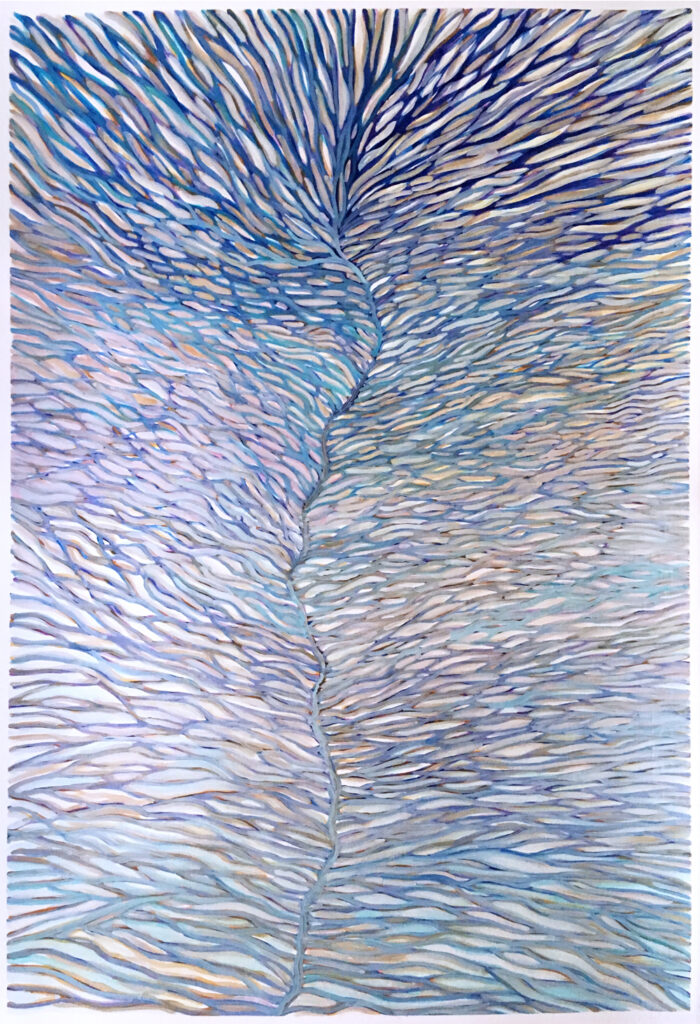
青雪路
2017
watercolor on paper
画: 54.5 × 37 cm
紙: 56 × 38 cm
水彩ドローイング『青雪路』
1ヶ月程かかって、アメリカから画集が届きました。詩人デーヴィット・シャピロ解説の『モンドリアン・花』です。表紙は、水彩で描かれた一輪の百合の花が印象的な表紙です。
モンドリアンは、代表作『ニューヨーク・ブギウギ』というような幾何学的な冷たい抽象絵画で有名になりましたが、有名になっても経済的に厳しく、花の水彩画で生活をしのいでいたのだそうです。この画集は、作家自身が最後まで自分の作品として評価しなかった、それらの花の水彩画を、この詩人が取り上げ、その作品の重要性を紹介する内容です。
私自身が最も興味を持っていることは、作家自身が認めなかった作品が、例えばジョージア・オキーフやジャスパー・ジョーンズに多大な影響を与えているという指摘です。
当時の時代がモンドリアンに求めていたものは、確かに抽象絵画であったけれど、その時代が去った時でさえも、また別の視点から重要な側面が浮上するものが残せていることに、深い感銘を受けてしまいます。
また同時に、作家自身が自分の作品をどこまで評価できるか、という問題は、おそらく永遠に未解決のままなのでしょう。むしろ、重要なのは、評価しなかった、されなかったものの中にも、その後の絵画の可能性があるということです。私自身、モンドリアンもオキーフもジャスパー・ジョーンズであっても、気が付くことができなかった「何か」を探り当てたい、そういう気持ちで画集を眺めているところです。
そういうわけで、昨年暮れから始めたドローイングは、材料をインクや水彩にまで幅を広げて、大きめの作品にも挑戦している最中です。いろいろな作風を試しながら、この『青雪路』という作品が生まれて来ました。
これまでの水彩画であまり活用されてこなかった「白」という絵の具。水彩画では、紙の白さを生かすことが望まれて来ているわけですが、それをあえて崩していく方向で制作しています。実は、モンドリアンの花の水彩画には、雪のように舞い散る白線描が施されているものがあり、それが私の琴線にとても響いて来たのです。それは、この画集が届くまで全く知らないことでしたし、画集の図版からは、あまりにもデリケートな描写で、残念ながら目ではよく確認できません。でも、この詩人の解説文にそれを指摘する「snowy work」という言葉が、私にある種のヒント、使命のようなものを与えてくれたのでした。
2月の軽井沢では、「白糸の滝」が氷の幕のようになるとのこと。是非自分の足で訪ね、土地からもインスピレーションを頂いて、新しい表現の可能性へ向かって行きたいと思っています。
画家川田祐子自伝:迷路
私の部屋は、家の中心から見て北西にあって、元々は父方の祖父を北海道から呼び寄せて、住むために用意されたものでした。その部屋には、ガラス扉のついた古く大きな本棚が置かれていて、一番下には引き出しがあり、クレパスや色鉛筆が詰め込まれていました。ガラス扉は観音扉になっていて、上部と下部の両方が開いたり、閉めたり出来るようになっていました。ガラスは、分厚く、細かな凸凹の模様ガラスになっていて、ガラス越しには中に何が入っているのかはわからないのでした。
その凸凹の一つ一つを目を近付けて見ていると、虹色の彩光と共に、歪んだ世界を覗くことが出来たのでした。不思議な別世界への扉の向こうには、御伽の国の物語が詰め込まれていましたが、それとは別に私の一番のお気に入りは、「迷路」の本でした。
丸い迷路の中心から始まるものや、どこから始まりなのかわからないもの、様々な迷路がページいっぱいに広がり、中には、何ページにもわたるものもありました。
それらの迷路に共通しているのは、迷路を地上の視点からではなく、空の上から見下ろす構図であったことです。全てを俯瞰して一瞥出来るのに、細かな道の描写に目が眩み、指でたどったとしても、注意深く周囲も探る目を同時に持たないと、行き止まりにぶつかり、引き返しているうちに、もとの道にさえ戻れなくなるのでした。何度も行き止まりにぶつかると、焦燥感と苛立ちで、疲弊していく自分に気づかされます。一見ただの模様に過ぎないジグザグの絵柄には、脈絡と意図によって用意された道が隠されていて、それを根気よく探すひと時は、自分自身の気持ちをたどる静寂な心地よい時間でした。
迷路で遊んだ後に、目に入る現実もその延長にあるかのように感じられたものでした。
脈、指紋、畳の目、板の間の木目、母の洋服ダンスに詰め込まれた洋服やスカーフのペイズリー柄。それらに刻まれている道なりをたどる時、私自身がミクロの存在であることを自覚し、その迷路の大きな世界に埋没して、現実から逃避することが出来るのでした。
大学受験のための勉強ばかりに追われる高校生活は、私にとってとても窮屈で居心地の悪い時期でした。その窮屈な生活に、絵を描くことは、オアシスの泉が底なし沼になる危険性が感じられ、そこは私にとってますます立ち入り禁止の聖地となって行きました。
私は、自分自身の希望や夢に従うのではなく、ゆっくりと周囲の人たちの目や声を頼りに歩き始めていたのです。それは、人によっては目隠ししてもあたかもまっすぐな壁のない道のりであるのに対して、私にとってはまるで迷路のように様々な行き止まりが用意されて行くのでした。
今の私なら、それがどういう状況を意味しているのかを、高校生の自分自身に諭すことが出来ます。「自分の本当の気持ちに素直に従いなさい」と。
しかし残念ながら、その声は当時の自分の耳には届くはずがありません。ただ、当時の自分が感じていた違和感と、このままではいけないと言う胸騒ぎのようなものだけは、伝えることは出来ていたのかもしれません。
私はその迷路にまんまとはまり込み、進路が決められないうちに、高校3年の冬を迎えました。
(次号に続く)
制作の近況:新作水彩ドローイング
使用している紙は、フランス製の水彩紙アルシュやイタリア製の水彩紙ファブリアーノです。どちらもコットン100%で特厚口の定評のあるものです。また描材の水彩絵の具は、ドイツ製のシュミンケの顔料をアラビアゴムで練った、自作の水彩絵の具を使っています。
一般にチューブで売られている水彩絵の具には、体質顔料と言って増量剤が含まれているために色が弱々しい傾向にありますが、純粋な顔料にアラビアゴムを自分で調節しながら添加することで、絵の具の光沢や耐色性の効果を高めるようにしています。
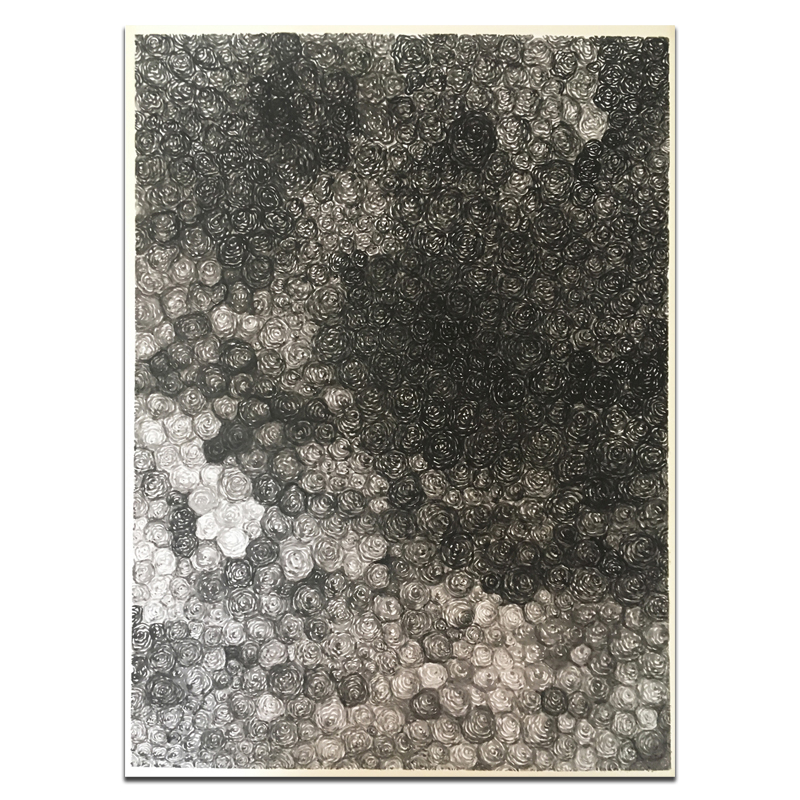
連理-石
2017
watercolor on paper
画: 72.7 × 53 cm
紙: 76 × 56 cm
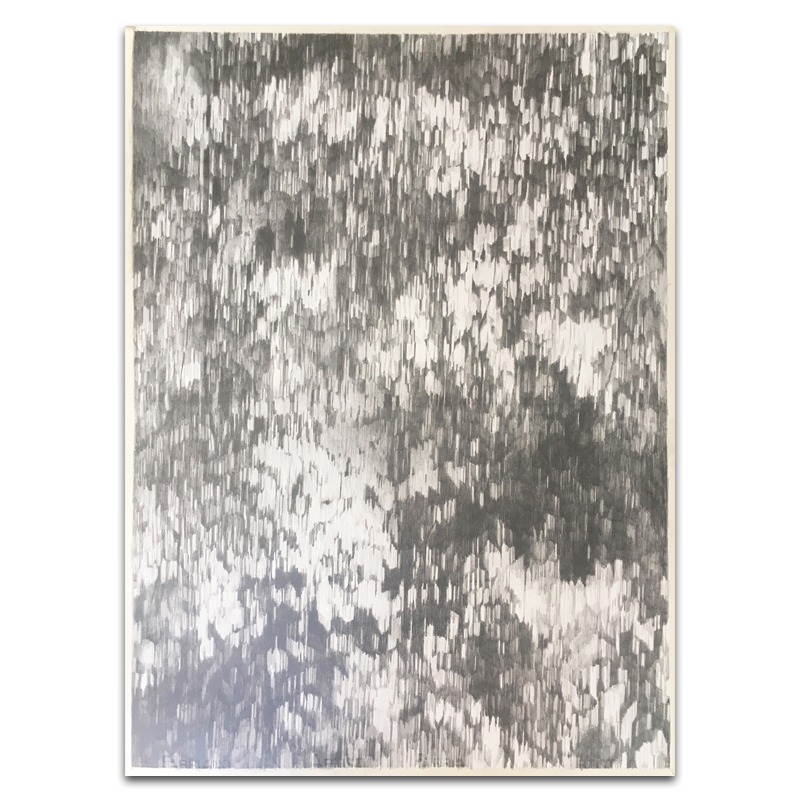
降積
2017
graphite on paper
画: 72.7 × 53 cm
紙: 76 × 56 cm
SOLD OUT
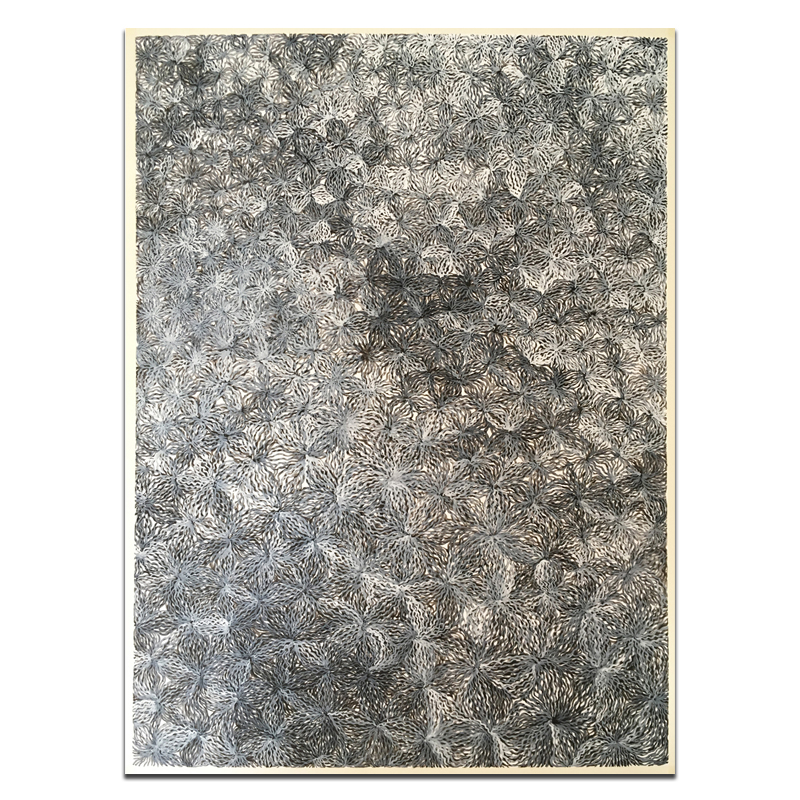
連理-雪花
2018
gouache on paper
画: 72.7 × 53 cm
紙: 76 × 56 cm
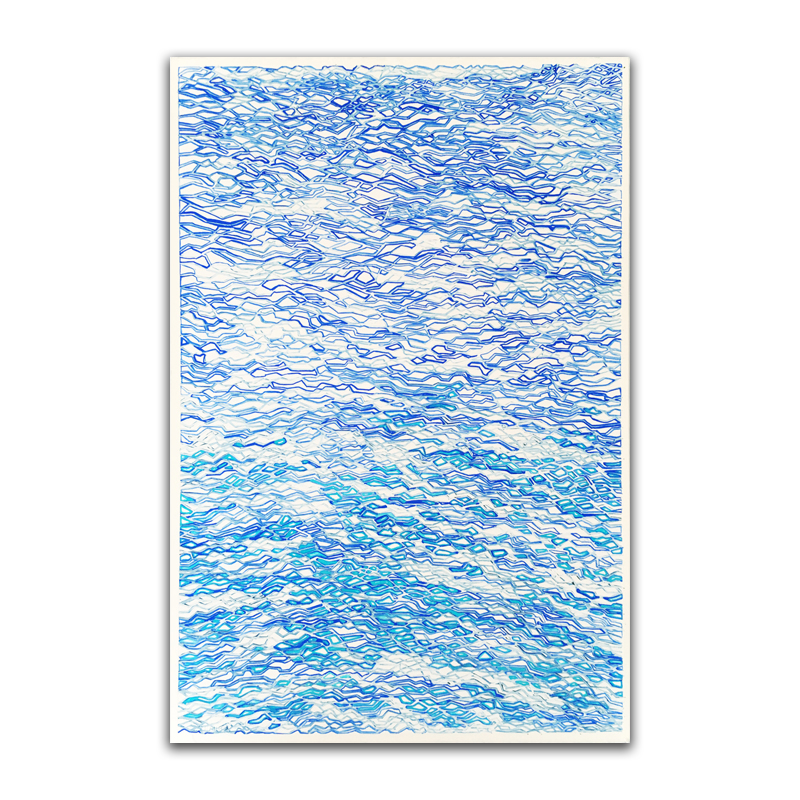
氷泉
2018
watercolor on paper
画: 55.4 × 37 cm
紙: 57 × 37 cm
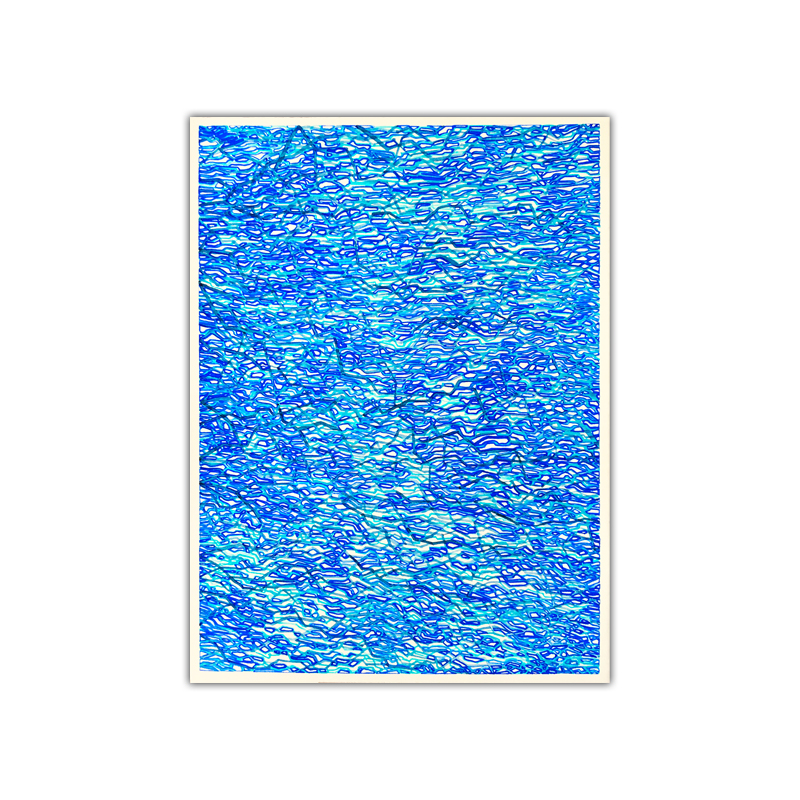
氷枝
2018
watercolor on paper
画: 37 × 27 cm
紙: 38.3 × 28.6 cm
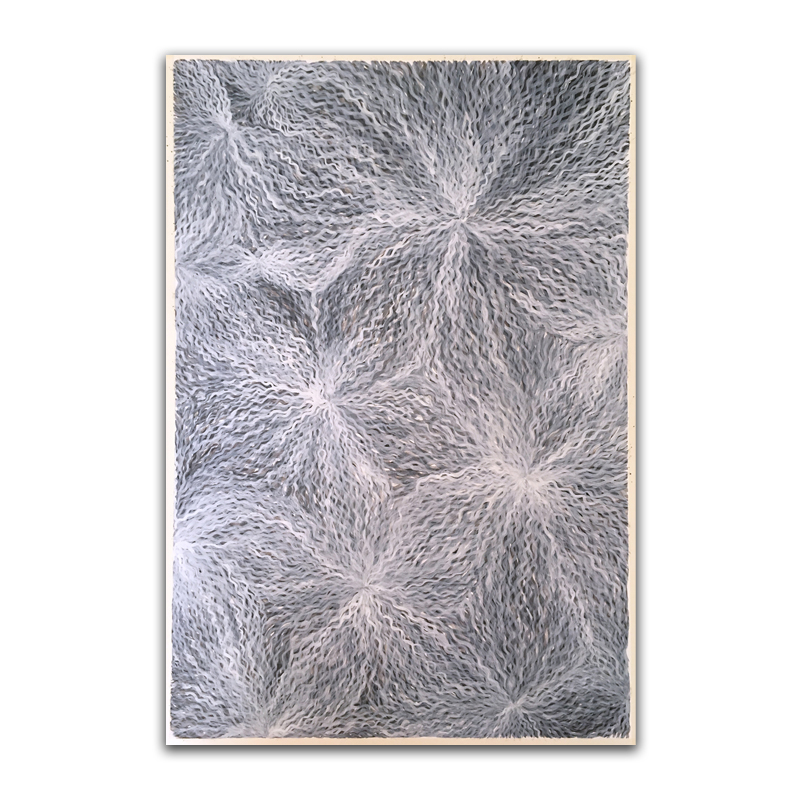
連理-鶴
2017
gouache on paper
画: 54.2 × 36.5 cm
紙: 56 × 38 cm
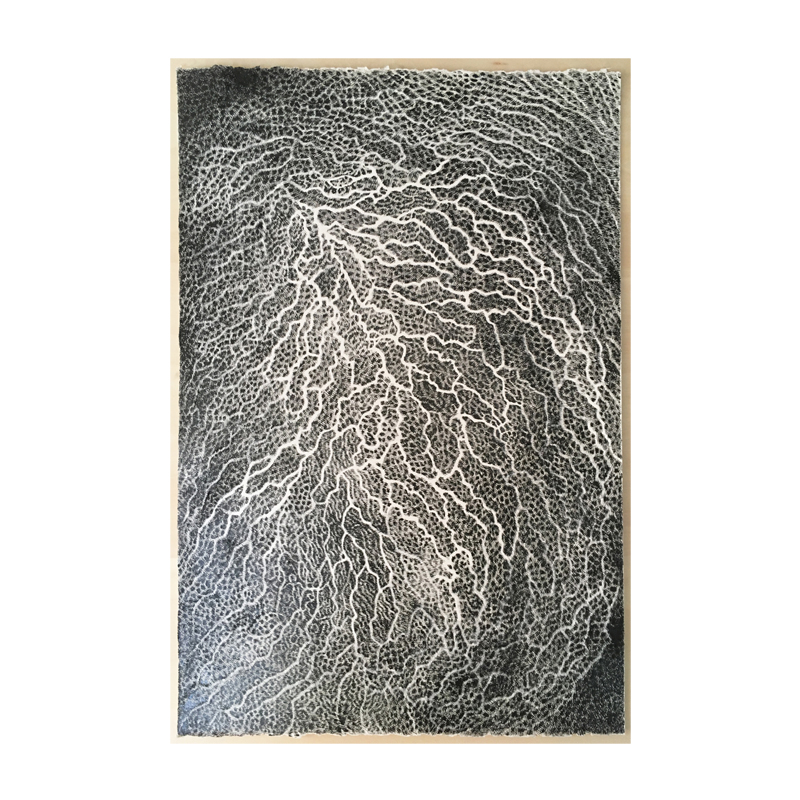
連鎖ー鯉
2018
ink on paper
画: 57.5 × 38.3 cm
紙: 57.5 × 38.3 cm
SOLD OUT
*以上の水彩ドローイングの額装は、小サイズで5000円、中サイズで7000円、大きいサイズは2万円程でご用意出来ます。ご興味のある方は、お気軽にご相談下さい。
お知らせ:Artists of Yokosuka 平成29年度第4期所蔵品展
現在、横須賀美術館所蔵の川田作品3点が展示されています。
Artists of Yokosuka 平成29年度第4期所蔵品展
会期: 2017.12.23 (土) – 2018.4.1 (日)
*2月18日(日) 無料観覧日
開館時間: 10:00~18:00
休館日: 2017年12月29日(金)~2018年1月3日(水) / 2018年1月9日(火)、2月5日(月)、3月5日(月)
会場: 横須賀美術館所蔵品展示室
主催: 横須賀美術館
「画家川田祐子のニュースレター」は、
応援して下さる方々に向けて、
毎月1回手動で配信するメルマガ・サービスです。
次号は2月20日の送信予定です。
YUKO KAWADA Official Site
http://kawadayuko.jp
No.14に続く
English versionz
Painter Yuko Kawada’s Newsletter @ No.13
Late last year, I bought some fillet cuts of Saku carp at the local Tsuruya supermarket. Looking up recipes online, I found a recipe for “Koi-koku,” a local traditional dish of this region. Although called a recipe, it was remarkably simple: just toss the chopped chunks straight into a pot, pour in plenty of water, and add only sake and miso for seasoning (I went with a Saikyo miso style). I also added radish and carrots from the fridge and let it simmer on the stove for an hour and a half.
When I first saw the scale patterns of the carp, it felt somewhat non-edible, so I approached it with some trepidation. However, the firm, plump meat had a wonderful chewiness, and I thoroughly enjoyed the rich, flavorful soup packed with fat. During the first three days of the New Year, I was able to put rice cakes received as support into the pot and enjoy a delicious meal.
According to someone I spoke with, while red sea bream is considered the high-end delicacy among fish today, prior to the Edo period, carp was the prized fish, and crane was the ultimate delicacy among birds. Eating crane sounds like something one would hesitate to do, but a frequent visitor to my past solo exhibitions whose family name was “Tsurumai” (meaning crane taste) once shared that exact historical origin with me. I have yet to experience eating crane, however.
Yet, speaking of “crane,” one naturally thinks of “turtle”. Long ago, following my father’s last wishes, I traveled to Ogasawara and ate sea turtle sashimi on Chichijima. I had quite a bit of hesitation about that as well, but the red meat was very wild, possessing a springy texture and deep flavor similar to beef tataki.
How might the ingredients consumed by an artist influence their creative output (laughs)?
This month’s opening greeting has become a collection of auspicious foods, serving as my New Year’s greeting.
Wishing you all happiness and good fortune in the coming year.
Yuko Kawada, Painter
Blue Snowy Path
2017
watercolor on paper
Picture: 54.5 × 37 cm
Paper: 56 × 38 cm
Watercolor Drawing: “Blue Snowy Path”
After taking about a month to arrive from the United States, an art book finally reached me. It is Mondrian: Flowers, featuring commentary by poet David Shapiro. The cover is striking, featuring a watercolor rendering of a single lily.
Mondrian became famous for cold, geometric abstract paintings like his iconic work Broadway Boogie Woogie, but even after gaining fame, he struggled financially and reportedly scraped by making a living with watercolor paintings of flowers. This art book highlights these flower watercolors—works the artist himself never rated as part of his core oeuvre until the end—with the poet pointing out the significance of these creations.
What interests me most is the assertion that these works, unacknowledged by the artist himself, exerted a immense influence on figures like Georgia O’Keeffe and Jasper Johns.
While what the era demanded of Mondrian was indeed abstract painting, it is deeply moving to realize that even after that era passed, works remained capable of revealing crucial dimensions when viewed from a different perspective.
At the same time, the question of how far artists can truly evaluate their own work remains eternally unresolved. Rather, what is vital is that possibilities for future painting reside even within things that went unvalued or unrecognized. I look through this art book with a desire to discover that “something” which went unnoticed not only by Mondrian, but even by O’Keeffe and Jasper Johns.
For this reason, with the drawings I began late last year, I am expanding my materials to include ink and watercolors, currently attempting larger-scale works. Exploring various artistic styles in this process gave birth to this piece, Blue Snowy Path.
“White” paint is a color that has not been utilized much in traditional watercolor painting. In watercolor, preserving the whiteness of the paper itself has generally been desired, but I am producing work in a direction that deliberately disrupts that convention. In fact, among Mondrian’s flower watercolors, there are pieces rendered with fine white line drawings fluttering like snow, which struck a deep chord within me. That was something I had no idea about until this art book arrived, and unfortunately, the ultra-delicate lines are hard to confirm clearly with the eye from the plates in the book. However, the phrase “snowy work” used by the poet in his commentary offered me a kind of hint—a sense of mission, as it were.
In Karuizawa during February, “Shiraito Falls” (White Thread Falls) reportedly transforms into a curtain of ice. I hope to visit there on foot, receive inspiration directly from the land, and move toward new possibilities of expression.
Autobiography of Painter Yuko Kawada:Labyrinth
My room was located in the northwest corner from the center of the house, originally prepared to accommodate my paternal grandfather when we invited him from Hokkaido to live with us. Inside that room stood a large, old bookshelf with glass doors; its bottom drawer was packed with oil pastels and colored pencils. The glass doors were double doors, designed so both upper and lower sections could open and close. The glass was thick with fine, uneven textured patterns, making it impossible to see what was inside through the pane.
Looking closely into each of those textured bumps, I could peer into a distorted world accompanying rainbow-colored refractions of light. Beyond the door to that mysterious other world lay fairy tale stories, but quite apart from those, my absolute favorite was a book of “labyrinths”.
From ones starting at the center of a circular maze to ones where you couldn’t tell where the starting point was, various labyrinths filled entire pages, with some stretching across multiple pages.
What those labyrinths shared in common was that they were composed not from a ground-level viewpoint, but from an overhead perspective looking down from the sky. Even though everything could be surveyed in a single glance, one’s eyes would grow dizzy from the detailed path depictions; even if traced with a finger, unless you simultaneously possessed eyes to carefully probe the surroundings, you would hit a dead end, and while backtracking, end up unable to return even to the original path. Hitting dead ends repeatedly made me aware of a feeling of exhaustion from frustration and impatience. Hidden within those zig-zag patterns that appeared to be mere designs were pathways placed with logic and intent, and spending quiet moments patiently searching for them felt like a serene, comfortable time spent tracing my own emotions.
After playing with labyrinths, the reality entering my vision felt as though it existed as an extension of them.
Pulse lines, fingerprints, the weave of tatami mats, wood grain on wooden floors, and the paisley patterns on clothes and scarves packed in my mother’s wardrobe. Tracing the path outlined in those patterns made me conscious of my own microscopic existence, allowing me to submerge myself into the vast world of that labyrinth and escape reality.
High school life, consumed entirely by studying for university entrance exams, was a cramped and uncomfortable period for me. In that cramped life, drawing felt as though the oasis spring might turn into a bottomless quagmire, making it increasingly a off-limits sanctuary where I dared not tread.
Instead of following my own desires and dreams, I had slowly begun walking by relying on the eyes and voices of those around me. While that might have been a straight, wall-less path for someone else even if blindfolded, for me, various dead ends were being laid out like a labyrinth.
If it were me today, I could counsel my high school self on what that situation signified: “Follow your true feelings honestly”.
Unfortunately, however, that voice could never reach my ears at the time. Yet, perhaps I was able to convey at least the sense of discomfort I felt back then, along with a quiet foreboding that things could not go on this way.
I fell completely into that labyrinth, and before I could decide on my future path, the winter of my third year of high school arrived.
(To be continued in the next issue)
Recent Production Status:New Watercolor Drawings
The papers used are Arches from France and Fabriano from Italy. Both are 100% cotton, extra-heavyweight papers with established reputations. As for the watercolor paints, I use custom watercolor paints I make myself by grinding Schmincke pigments from Germany with gum arabic.
Generally, commercial watercolor paints sold in tubes contain extender pigments (fillers), which tends to make the colors appear weak. By manually adjusting and adding gum arabic to pure pigments myself, I enhance the paint’s luster and lightfastness.
Renri – Stone
2017
watercolor on paper
Picture: 72.7 × 53 cm
Paper: 76 × 56 cm
Snowfall Accumulation
2017
graphite on paper
Picture: 72.7 × 53 cm
Paper: 76 × 56 cm
Renri – Snow Flower
2018
gouache on paper
Picture: 72.7 × 53 cm
Paper: 76 × 56 cm
Ice Spring
2018
watercolor on paper
Picture: 55.4 × 37 cm
Paper: 57 × 37 cm
Ice Branch
2018
watercolor on paper
Picture: 37 × 27 cm
Paper: 38.3 × 28.6 cm
Renri – Crane
2017
gouache on paper
Picture: 54.2 × 36.5 cm
Paper: 56 × 38 cm
Chain – Carp
2018
ink on paper
Picture: 57.5 × 38.3 cm
Paper: 57.5 × 38.3 cm
*Framing for the watercolor drawings above is available for approximately 5,000 yen for small sizes, 7,000 yen for medium sizes, and around 20,000 yen for large sizes. Please feel free to consult if interested.
News & Announcements:Artists of Yokosuka: FY2017 4th Collection Exhibition
Currently, three works by Yuko Kawada from the Yokosuka Museum of Art collection are on display.
Artists of Yokosuka: FY2017 4th Collection Exhibition
Exhibition Period: December 23, 2017 (Sat) – April 1, 2018 (Sun)
*February 18 (Sun): Free Admission Day
Hours: 10:00 – 18:00
Closed: December 29, 2017 (Fri) – January 3,
2018 (Wed) / January 9 (Tue), February 5 (Mon), March 5 (Mon), 2018
Venue: Yokosuka Museum of Art, Collection Gallery
Organizer: Yokosuka Museum of Art
“Painter Yuko Kawada’s Newsletter” is a free monthly email newsletter service delivered manually to supporters once a month.
The next issue is scheduled to be sent on February 20.
(Yuko Kawada)
YUKO KAWADA Official Site
→ Next Issue: Newsletter No.14
← Return Issue: Newsletter No.12
ピンバック: 12@ニュースレター/News letter-2017-12 – YUKO KAWADA 's Note