
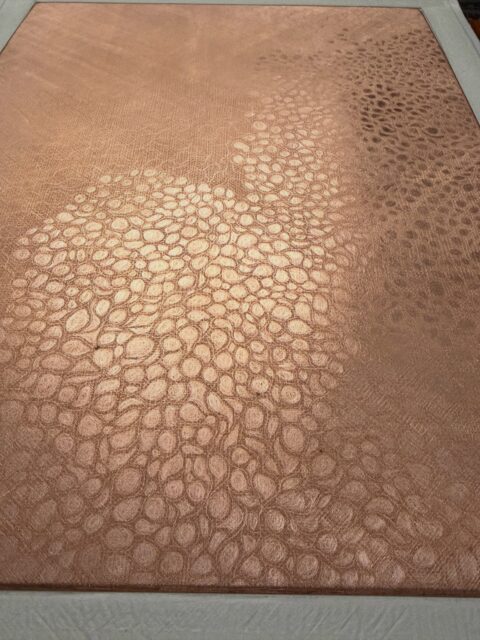
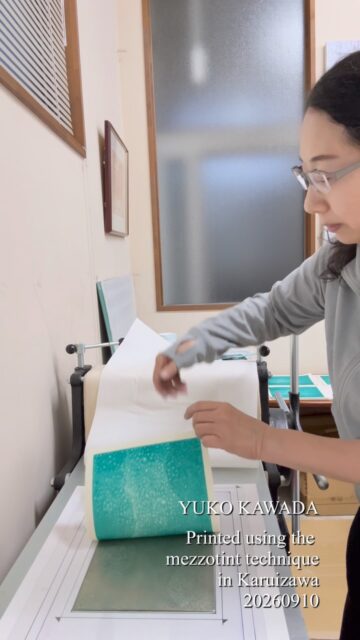



絵画をご覧になった人から、よく「これは何を描いているのですか?」「どうやったらこのような複雑な画面が描けるのですか?」と尋ねられます。
実は、私自身も最初から完成図が見えているわけではありません。この描き方は誰かに教わったものではなく、日々の制作のなかで「これが面白い」と気づいたことを積み重ねてきた結果、自然と生まれたものです。
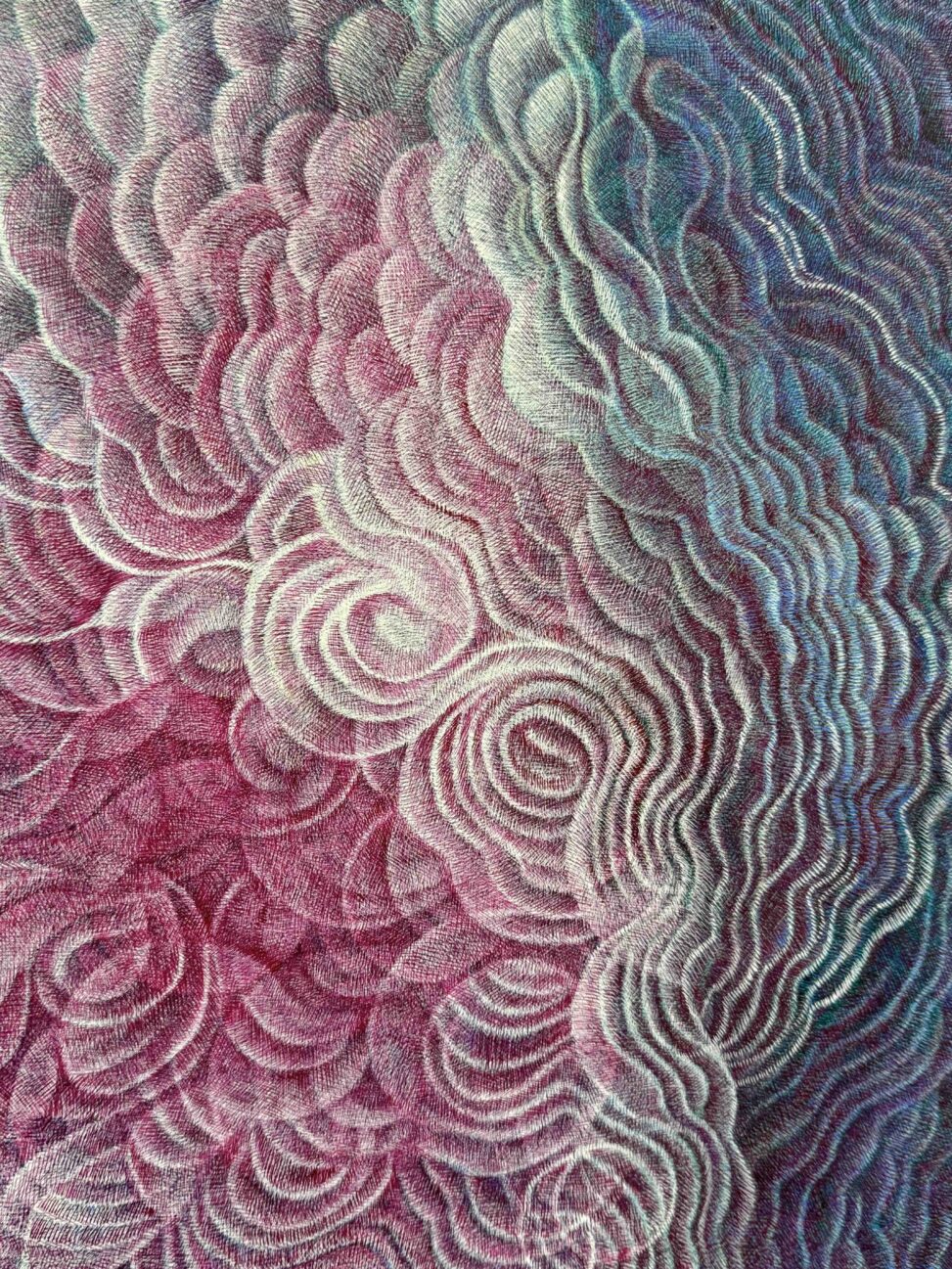
私がずっと追いかけているのは、二次元の平面のなかに「多次元性」を作り出すことです。具体的には、一つの静止した瞬間を切り取るのではなく、物事の時系列の変化が一つの画面の上で重なり合い、透明な残像のように幻想的に移りゆく世界を描き出したいと考えています。
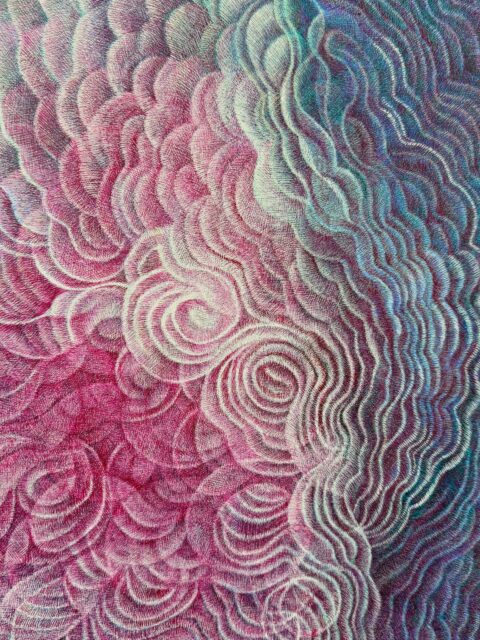
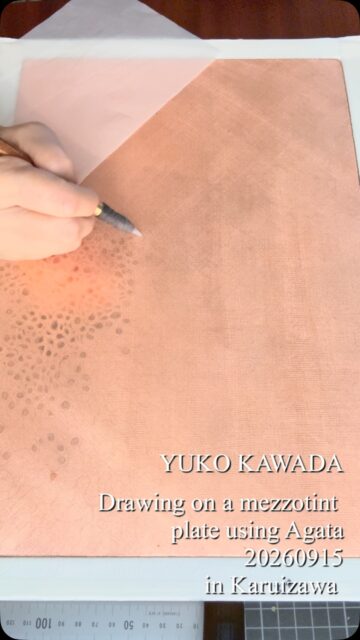
制作の入り口は、下絵のない即興的な線刻(スクラッチ)や線描です。無数の線を重ねていくうちに、画面の奥から偶然に立ち現れてくる形や光があります。それを極細の筆によるハッチングで丁寧に描き起こしていくのですが、偶然から出発しているため、途中でどうしても齟齬が生じたり、思い通りにいかなくなったりする部分が出てきます。
けれど、私にとって「うまくいかないこと」は失敗ではなく、むしろ最大の楽しみです。
齟齬が生じた部分は、隠蔽力の高いチタニウムホワイトの極細の線描などで自由に上書きし、消していきます。消したり、また別の層を浮かび上がらせたりする自由度を保つためには、画面が何層にも重複した構造になっていることがとても都合が良いのです。白の線で覆われた下の層は完全には消えず、半透明の残像となって現在の層と響き合います。その重なりは、日常の現実の見え方とは異なる世界の入り口のように思えて、筆を進めるのが楽しくて仕方がありません。
ですから、私には「描くネタを探す」という必要がありません。うまくいかないからこそ思わぬ形が生まれ、次の展開へと誘ってくれる——私にとって絵を描くこと自体は、尽きることのない知的なゲームのようなものなのです。
また、私は他の作家たちの絵画を見ることも、その人が「どういう思考を辿ってこの画面に至ったのか」を想像し、調べることも大好きです。古今東西の絵画と対話するその知的な楽しみのすべてが、私の画面の奥行きを豊かに育ててくれています。
完成された「答え」だけでなく、試行錯誤し、消し、重ねていくプロセスの自由さと喜びそのものが、画面を通して少しでも多くの方に伝わればと願っています。
Studio Note #01: Weaving Layers of Time into a Two-Dimensional Surface — A Game of Erasure and Emergence
People who view my paintings often ask me, “What is this depicting?” or “How do you create such intricate surfaces?”
In truth, I do not begin with a predetermined final image in mind. This method was never taught to me by anyone; rather, it evolved naturally through years of daily studio practice, simply by following what I found fascinating along the way.
What I have consistently pursued is the creation of multi-dimensionality within a two-dimensional plane. Rather than capturing a single, static instant, I seek to evoke a world where chronological shifts overlap upon a single surface, drifting and transforming like translucent afterimages.
My process begins with improvisational scratching (incised lines) and freehand drawing without preliminary sketches. As countless lines accumulate, unexpected forms and luminosity begin to emerge organically from the depths of the surface. I then articulate these emergent forms through meticulous hatching with an ultra-fine brush. Because this process starts from spontaneity, discrepancies and moments where things do not go as planned inevitably arise.
To me, however, “things not going as planned” is never a failure—in fact, it is my greatest source of joy.
Where discrepancies occur, I freely paint over and erase them using fine linear strokes of highly opaque Titanium White. Having a multi-layered surface structure is essential for preserving this freedom to erase and reveal at will. Beneath the veil of white lines, the underlying layers never completely vanish; instead, they persist as semi-transparent afterimages that resonate with the layers above. This overlapping feels like an entrance into a realm beyond everyday visual perception, making every brushstroke deeply exhilarating.
Because of this, I never need to search for “subjects” to paint. Precisely because things do not go according to plan, unforeseen forms emerge and invite the next move—for me, the act of painting itself is an endless, joyful intellectual game.
At the same time, I love looking at paintings by other artists, imagining the thought processes that led them to their surfaces, and researching their methods. All of that intellectual pleasure—engaging in a silent dialogue with paintings across time and cultures—continually enriches the depth of my own visual world.
My hope is that through the painted surface, viewers can sense not merely a finished “answer,” but the freedom and sheer delight of the process itself—of trial, erasure, and layering.
コメントを残す