
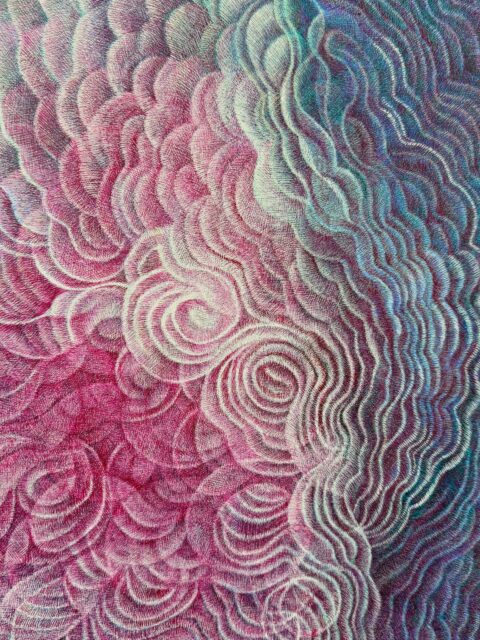
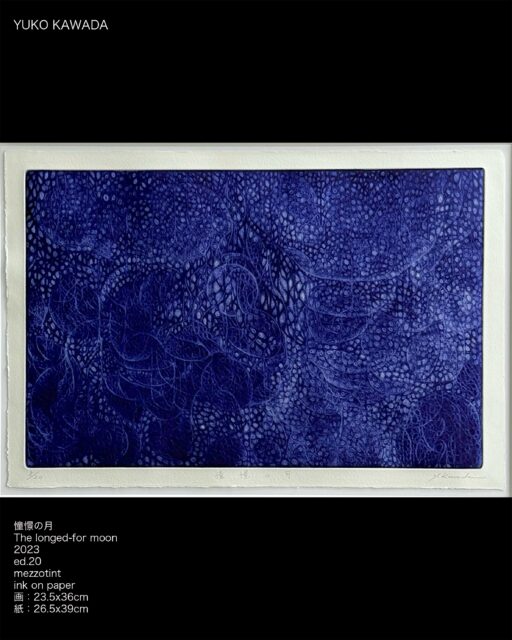
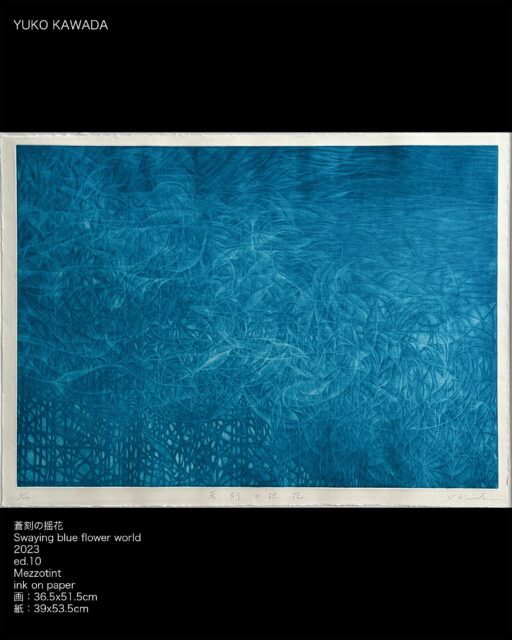

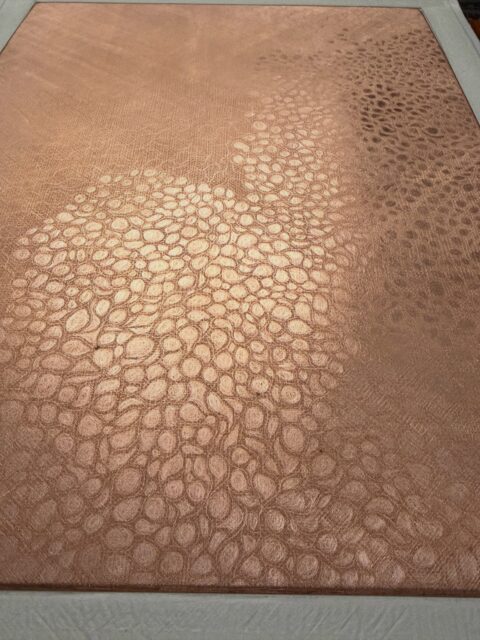
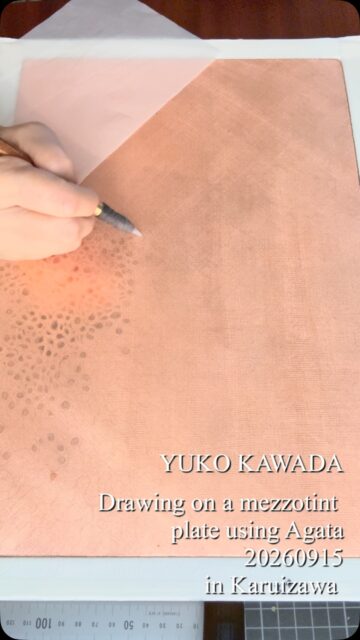
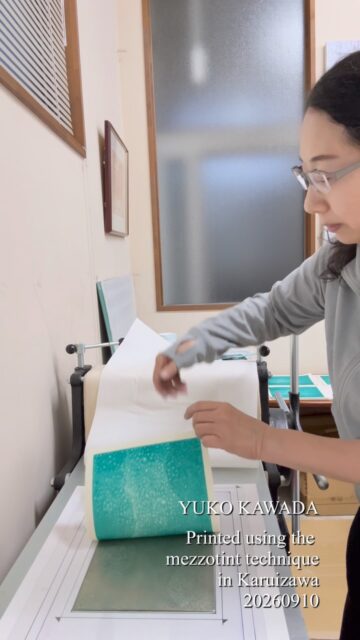



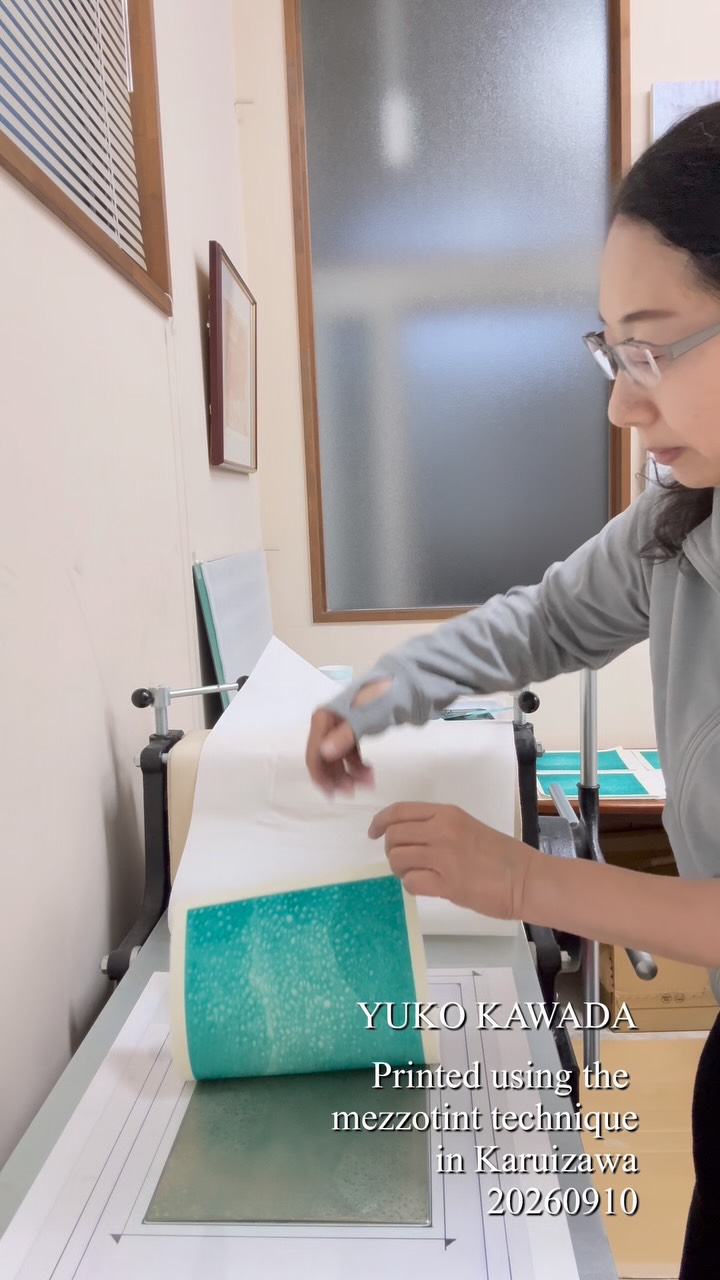


漆黒の闇から、無数の極細の線が重なり合うことで徐々に光と立体が立ち上がってくる——本作は、銅版画(メゾチントやエッチング)の製版プロセスや、私が長年取り組んできたスクラッチ・ハッチングによる絵画制作の思考を、アルゴリズム(p5.js)へと翻訳したジェネラティブ・スタディです。
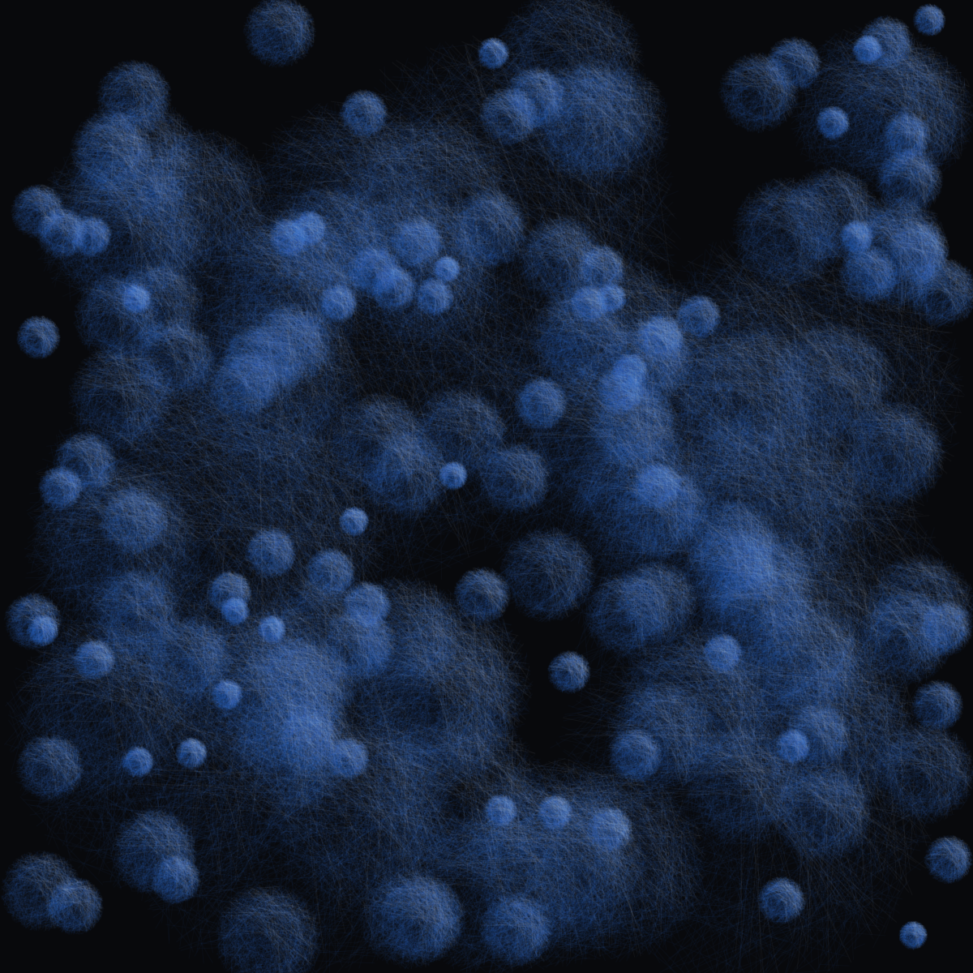
銅版画では、ビロードのような深い黒(バー)を刻んだ版から、光を当てる部分だけを削り、あるいは無数の線を交差させて集積させることで、闇の奥に潜むフォルムを呼び覚まします。本プログラムでは、140,000本におよぶフタロブルー、ウルトラマリン、そして淡い銀色の微細な線分が、確率的な光の角度(キアロスクーロ)に従って空間上に少しずつ降り積もっていきます。
画面に現れる大小の球体群は、特定の設計図による固定された形ではなく、ページを開くたび、あるいは「新しい版で描き直す」ボタンを押すたびに異なる配置と密度で生成される一回性の構造です。物理的な絵具や銅版に刻む「物質の記憶」と、コードによって時間の中で編み上げられる「非物質の層」。その二つの境界で生まれる静かな宇宙の呼吸「青い毬藻惑星(Blue Marimo Planets)」を、記録としてここに留めます。
From a velvety expanse of deep black, countless hair-thin lines gradually accumulate to give rise to light and volume. This generative study (built with p5.js) translates the tactile logic of intaglio printmaking—specifically mezzotint and etching—as well as my decades-long practice of scratch and hatching painting into an algorithmic process.
In traditional printmaking, form is awakened from darkness either by burnishing light out of a densely rocked copper plate or by layering intersecting hatched lines. Here, up to 140,000 fine strokes of phthalo blue, ultramarine, and pale silver settle across the dark ground according to a probabilistic chiaroscuro, allowing luminous spheres of varying scales to emerge from the void.
Rather than following a fixed blueprint, each iteration is a singular, unrepeatable composition—much like a monotype print pulled from a plate. By bridging the physical memory of incised metal and pigment with immaterial layers woven in real time through code, this note records a quiet, evolving cosmos of line and shadow— “Blue Marimo Planets.”
.
コメントを残す