



【導入 / Introduction】
関心を持つようになり、影響を受けてきた作家を思い起こしただけでも記録しておこうと思います。無意識のうちに影響を受けていたり、今後出会う作家の中に、自分の考えや制作方向が同じだと気づく作家もあるかもしれません。
I would like to record here the artists who have captured my interest and influenced my practice, simply as they come to mind. There may be others whose influence worked upon me unconsciously, as well as artists I have yet to encounter whose artistic philosophy and direction resonate with my own.
ホルスト・ヤンセン — 枯れゆく花に宿る絵画の真実
Horst Janssen: The Truth of Painting in Fading Flowers
美大に入学後、母と一度だけ、当時鎌倉の鶴岡八幡宮の境内にあった神奈川県立近代美術館で開催されていた「ホルスト・ヤンセン」の展覧会を見に行ったことがありました。花の移り変わりを水彩でスケッチした作品で、花が刻々としおれてしまってもなお、それが美しく描かれていること自体が絵画の素晴らしさだと気づいたとき、美大に進学して良かったとつくづく思ったものでした。あのようなクオリティの高い小品を並べて見応えのある展覧会は、私の中では、その後2024年にロンドンのテート・ブリテン(クロア・ギャラリー)のターナー・ギャラリーの水彩画展示室と肩を並べる、思い出深い展示です。
After entering art university, I visited a Horst Janssen exhibition with my mother at the Museum of Modern Art, Kamakura, then located within the grounds of Tsurugaoka Hachimangu Shrine. Looking at his watercolor sketches tracing the metamorphosis of flowers, I realized that even as a blossom wilts from moment to moment, the sheer beauty with which it is rendered embodies the true wonder of painting—a realization that made me deeply grateful I had chosen to study at art university. In my memory, an exhibition of such high-caliber small works stands shoulder to shoulder with the watercolor rooms of the Turner galleries (Clore Gallery) at Tate Britain in London, which I visited in 2024.
エドガー・ドガ — アングルの泉から流れる「無数の線描」
Edgar Degas: “Countless Lines” Flowing from the Fountain of Ingres
子供の頃から知っていたということもありますが、初めてパリのオルセー美術館で、ドガの展示室に展示されていたパステル画にはとても衝撃を受けました。パステルの線描が鮮やかで美しかったからです。近くで見ると、無数の線描の束で立体的に描かれていました。写真画像では、多分そこまで気づくことはなかったと思います。
この美しい鮮やかなピグメントの束の由来を知ったのは、ごく最近のことです。若きドガが生涯に一度だけ出会うことができた老巨匠アングルは、彼が生涯大切にすることになる伝説の助言を贈りました。
「若者よ、線を描きなさい。無数の線を描きなさい。記憶からでも、自然からでもだ。そうすれば、君は素晴らしい芸術家になれるだろう。」
このことを知って、私が導かれた線描がアングルの泉からとうとうと流れてきたと思うと、アートの力の偉大さを身にしみて感じたのでした。
Although I had known his work since childhood, seeing Edgar Degas’s pastel paintings in person for the first time in the Degas galleries at the Musée d’Orsay in Paris struck me with tremendous force. The linear strokes of pastel were astonishingly vivid and luminous. Viewed up close, the forms were sculpted out of dense bundles of countless hatched lines—a quality I would likely never have noticed from photographic reproductions alone.
It was only very recently that I learned the origin of those vibrant bundles of pigment. During the single encounter the young Degas had with the aging master Jean-Auguste-Dominique Ingres, Ingres offered the legendary advice that Degas would cherish for the rest of his life:
“Draw lines, young man, many lines, whether from memory or from nature; it is in this way that you will become a good artist.”
Learning this, and realizing that the linear drawing practice to which I was guided flows in an unbroken stream from the fountain of Ingres, made me feel the profound magnitude of art’s power.
エミリオ・グレコ — クロスハッチングによる緻密な存在感
Emilio Greco: Intricate Presence Through Cross-Hatching
ペリクレ・ファッツィーニと並んで、イタリアの現代具象彫刻を代表する作家です。私が2年と8ヶ月だけ学芸員として勤めた美術館には、この作家の線描のドローイングが所蔵されていました。極細目のアルシュ紙に、迷いのないつけペンの線描でクロスハッチングによって女性の存在が浮かび上がるように描かれていた具象のドローイングでした。それはとても緻密で美しいものでした。
Alongside Pericle Fazzini, Emilio Greco stands as a leading figure of modern Italian figurative sculpture. The museum where I worked as a curator for two years and eight months held one of his ink drawings in its collection. Executed on hot-pressed Arches paper, it was a figurative drawing in which a woman’s presence emerged through unhesitating dip-pen strokes and delicate cross-hatching—a work of extraordinary precision and beauty.
岩橋英遠《彩雲》 — 日本画の顔料が放つプリズムの輝き
Eien Iwahashi’s Saiun (Iridescent Clouds): The Prismatic Radiance of Nihonga Pigments
私が相模原市博物館準備室でアルバイトをしていたとき、すでに博物館の所蔵庫には、市が買い集めていた絵画作品が保管されていました。その脇の作業空間で、私は資料整理をしていました。やがて博物館がオープンした際に、その所蔵品を特別展示した中に、この岩橋英遠《彩雲》があることを知ったのでした。展示室で見たときに、初めて日本画の顔料の美しさを知りました。《彩雲》の微妙なプリズムの色使いが絶妙でした。
While I was working part-time in the preparatory office for the Sagamihara City Museum, paintings acquired by the city were already housed in its storage vault, and I organized archival materials in an adjacent workspace. When the museum eventually opened and held a special exhibition of its collection, I discovered that Eien Iwahashi’s Saiun (Iridescent Clouds) was among them. Seeing it in the gallery was the first time I truly experienced the beauty of mineral Nihonga pigments; the subtle, prismatic interplay of colors in Saiun was exquisite.
ジョージア・オキーフ — 無言の微笑みが教えてくれた「美の希望」
Georgia O’Keeffe: Silent Smiles and the Hope of Beauty
私が、まだ自分が画家になるとは全く想像もできなかった頃に、同じ職場の人が「オキーフのような作家になりたい」と言っているのを側から聞いていました。そのときに丁度、横浜美術館でオキーフの大きな企画展があった頃のことです。私は、特にそのときは何も感じず、その展覧会も見に行くことはありませんでした。
やがて、そのオキーフのカタログを勤め先のデスクの上の本棚に見つけたときに、「そういえば」と手に取ることになりました。私には、その花の絵に見覚えがありました。美大生の頃に父と東京国立近代美術館に展覧会を見に行ったときに、所蔵品展示室にて、小さな花の作品を見かけたことがあったからです。そのときの展示はちょっと変わっていたので、それで印象に残っていたのです。度々美術館で見ていた白髪一雄の作品のすぐ近くにあったからです。なぜその二つが並ぶのか、ずっと気になっていたのです。今でもその疑問の答えは見つかっていません。
しかし、やがてずっと後に、また私は東京国立近代美術館でオキーフの作品とぱったり再会しました。私が作家活動を始めた初期の頃のことです。その絵は、1937年制作の《タチアオイの白と緑―ペダーナル山の見える(Hollyhock White and Green with Pedernal)》(40.6×76.2cm)でした。私は、山の上空に白い大きな花が咲く作品を見て、「何て清らかで、軽やかな絵なんだろう」と、しばらく見惚れていました。山も空も花も何もかもが白く透き通っていて、聖なる微笑みをたたえているかのような絵でした。
すると、ちょうどそこに、年配の女性も立ちすくみ、じっと見ていたかと思うと、私とちょうど目があって、思わず二人でため息をつきながら、自然に微笑み合ったのです。それは、赤の他人同士が、無言にもかかわらず、同じ気持ちで意気投合した瞬間でした。私たちは、互いにそのことに気づき、共感し合う喜びに包まれたのでした。
絵画の美とは、こういう経験を人々に与えることなのだと、私は初めて知りました。そして、この些細な経験は、私の絵画制作に大きな希望を与えたのです。美の経験さえあれば、世界中が、言葉なしに、微笑みに包まれ、愛や平和が訪れると、私は信じるようになりました。
At a time when I could not yet imagine ever becoming a painter myself, I overheard a colleague say, “I want to become an artist like O’Keeffe.” This was right around the time a major Georgia O’Keeffe retrospective was being held at the Yokohama Museum of Art. At that moment, I felt no particular pull and did not go to see the exhibition.
Later, noticing the exhibition catalogue on a bookshelf on my office desk, I picked it up out of passing curiosity. I recognized the flower painting inside. Back when I was an art student visiting the National Museum of Modern Art, Tokyo with my father, I had come across a small flower painting in the collection galleries. The installation had struck me as unusual because it hung right next to a work by Kazuo Shiraga, whose paintings I often saw in museums. I had always wondered why those two works were placed side by side—a question to which I still have not found an answer.
Years later, however, during the early days of my career as an artist, I unexpectedly encountered O’Keeffe’s work again at the National Museum of Modern Art, Tokyo. The painting was Hollyhock White and Green with Pedernal (1937, 40.6 × 76.2 cm). Looking at the large white blossom floating above the mountain, I stood spellbound for a long time, thinking, “What a pure, weightless painting.” Mountain, sky, and flower were all translucent white, as if the canvas itself held a sacred smile.
Just then, an elderly woman standing beside me was gazing intently at the same painting. Our eyes met, and without thinking, we both let out a soft sigh and exchanged a natural smile. Though complete strangers, we had connected instantaneously in silent, shared emotion. Recognizing that mutual understanding, we were both enveloped in a quiet joy of empathy.
For the first time, I understood that the true beauty of painting lies in granting people such experiences. That seemingly small moment gave immense hope to my own artistic practice. I came to believe that wherever the experience of beauty exists, the world can be embraced in wordless smiles, ushering in love and peace.
マーク・トビー — フィレンツェの図書館での再会と、銅版画への確信
Mark Tobey: A Reunion in Florence and Conviction in Intaglio Printmaking
2005年にドイツのアート・ケルン(Art Cologne)の会場で、マーク・トビーの作品を初めて知りました。色々なバリエーションの細かい抽象表現が気になりました。ケルンではマーク・トビーの画集は見つからず、ハンブルクの昔から知っている大きな古本屋まで行って、ようやくマーク・トビーの画集を見つけて買って帰ったのでした。ニューヨークとは別の、シアトルを中心にした太平洋派(パシフィック・ノースウェスト・スクール)というムーブメントがあることを知りました。それはクラフト運動や、東洋的な思想の影響ともどこかで繋がっているくらいの情報しか知ることはできませんでした。
やがて、また思わぬ場所でマーク・トビーの作品と再会することになりました。時は2019年、場所はイタリアのフィレンツェです。そのとき私は、イルビゾンテ工房に銅版画の技法を学びに通っていました。ある日、何かの都合で工房が使用できない日があり、私は少しがっかりしたのですが、思い切って行くことができていなかった近くの国立図書館へ、銅版画のことを調べに行ってみたのです。歴史のある素晴らしい図書館でした。そこで、PCの検索でヒットしたのが「マーク・トビー」の版画集だったのです。図版ではなく、エディション付きの版画が何枚も納められたパッケージでした。それは「閲覧可能」とありました。迷うことなく受付で申請すると、版画閲覧室に行くように言われて、その部屋をノックすると、またそこに受付があり、紙を渡すと、手袋をした人が奥からこの版画集を持ってきてくれたのでした。素晴らしい装丁の中に、マーク・トビーの版画が、1枚1枚タトウに挟んでストックされていました。その一つ一つを開くたびに、息を飲みました。
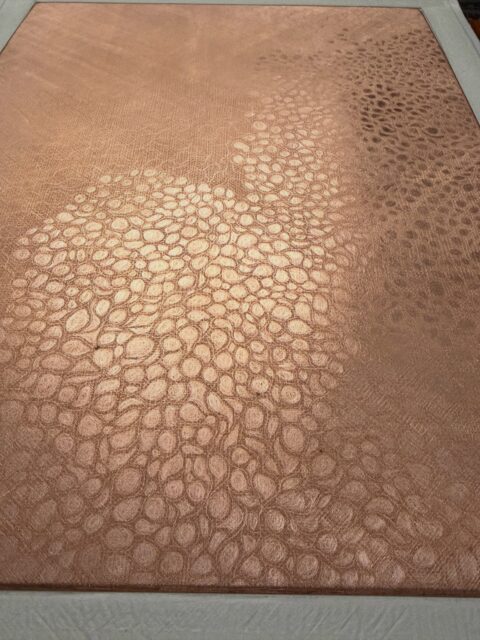
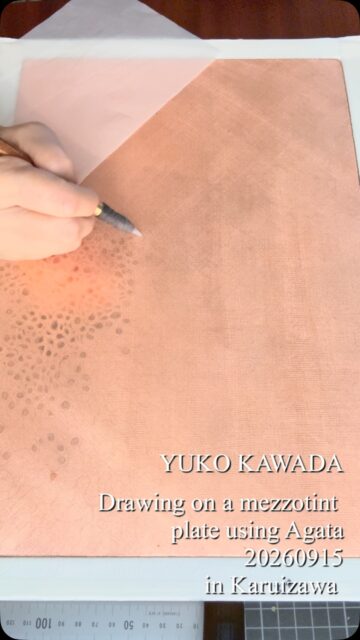
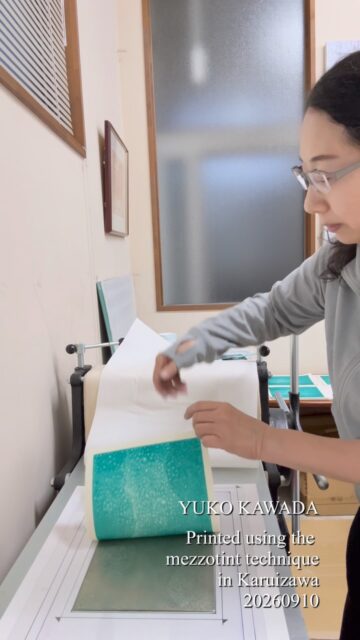
版画は、銅版画のアクアチントという技法で多色刷りされているものでした。抽象の軽やかな色合いの、緻密な表現。制作に関わっていたドイツの版画工房の名前が装丁の裏に記されていました。この経験から、私は自信を持って銅版画制作をするようになったのでした。
I first encountered the work of Mark Tobey in 2005 at Art Cologne in Germany. I was immediately drawn to the intricate variations of his delicate abstract compositions. Unable to find a monograph on Tobey in Cologne, I traveled to a large secondhand bookstore in Hamburg that I had known for years, where I finally tracked down a book on his work and brought it home. Through it, I learned that alongside New York, there had been a distinct movement centered in Seattle known as the Pacific Northwest School, loosely connected to the craft movement and Eastern philosophy.
Years later, I crossed paths with Mark Tobey’s work again in the most unexpected place. It was 2019, in Florence, Italy, while I was attending the Il Bisonte printmaking studio to study intaglio techniques. One day, when the studio happened to be closed, I felt a bit disappointed, so I decided to visit the nearby National Central Library—somewhere I had been meaning to go—to research copperplate printmaking. It was a magnificent, historic library. Searching their digital catalogue, I came across an entry for a print portfolio by Mark Tobey—not a book of reproductions, but an actual editioned portfolio containing multiple original prints, marked “available for viewing.” Without hesitation, I submitted a request at the desk and was directed to the print room. Knocking on the door and handing my slip to the attendant inside, a staff member wearing white gloves emerged from the back carrying the portfolio. Inside a refined binding, Tobey’s prints were housed individually in protective folders; each time I opened one, I caught my breath.
The prints were multi-plate color intaglios executed in aquatint—exquisitely detailed abstractions rendered in airy, luminous hues—with the name of the German printmaking workshop inscribed on the inside back cover. That encounter gave me the confidence to pursue copperplate printmaking wholeheartedly.