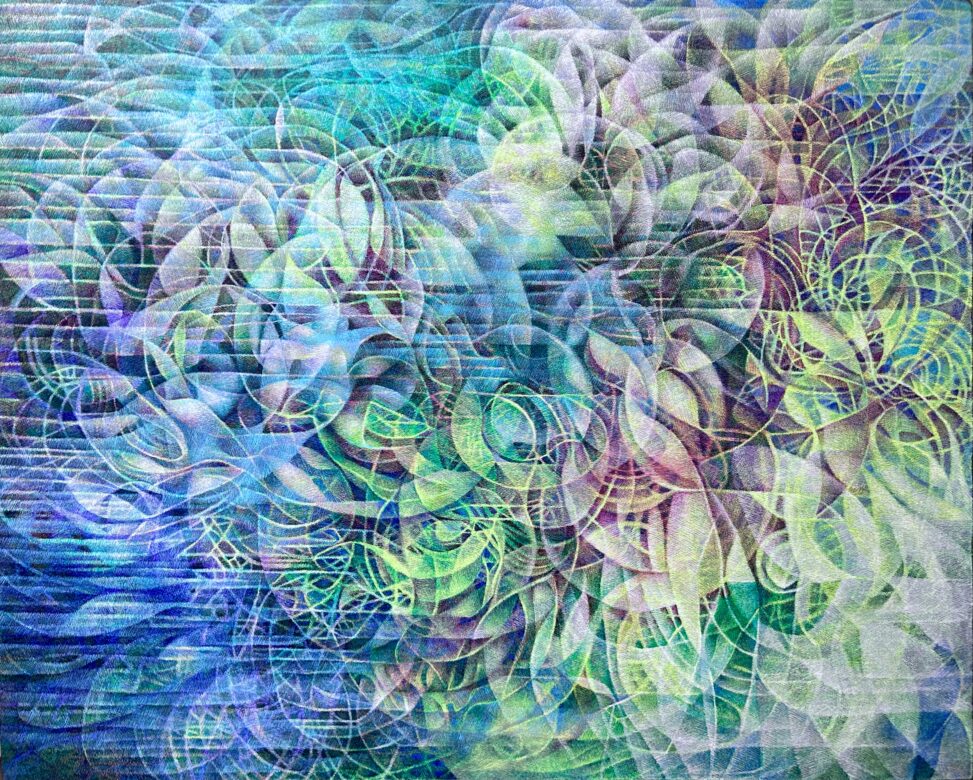
川田作品油彩絵画におけるシュミンケ・ムッシーニ樹脂油絵具とダンマールワニス下地による化学的相互作用および光学的効果の証明
1. ピュアテレピンによる「化学的再溶融(リソルフ)」メカニズム
1.1 溶解力(KB値)の適合性と下層樹脂の溶出
絵画用揮発性溶剤において、樹脂を溶解する能力を示す指標(カウリ・ブタノール値:KB値)には明確な差異が存在する。一般的な石油系無臭溶剤(OMS・ペトロール類)のKB値が25〜30前後と低いのに比べ、シュミンケ社製ピュアテレピン(天然テルペン油)はKB値55〜60前後という極めて高い溶解力を有する。
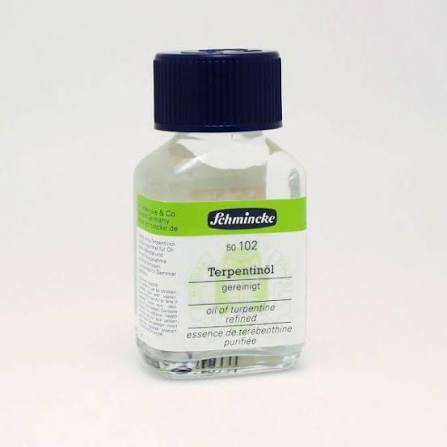
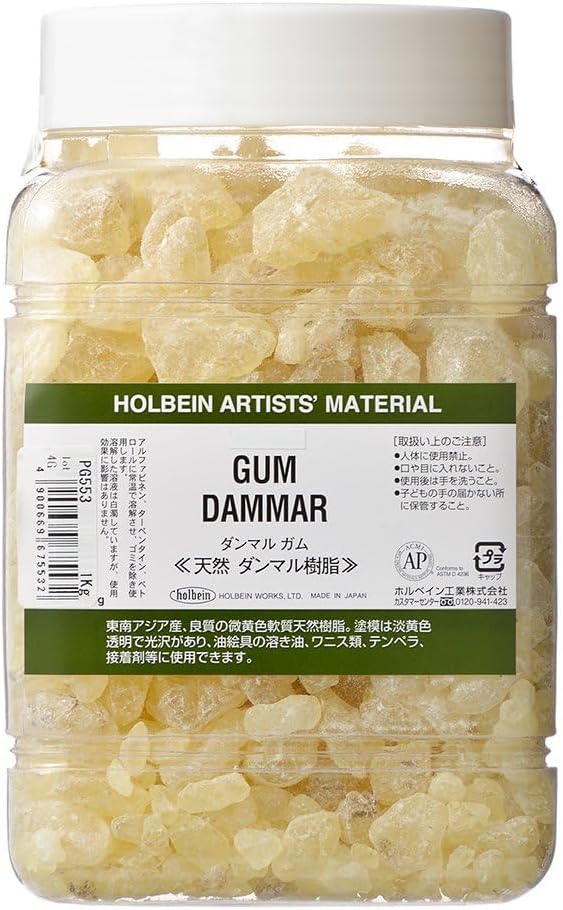
有色地塗り層に混ぜ込まれたダンマール樹脂(天然トリテルペン樹脂)は、ピュアテレピンに対して特異的な化学的親和性を持つ。ピュアテレピンで希釈された絵具の筆先が有色地塗りに触れる瞬間、下層に定着していたダンマール成分がミクロレベルで部分的に再溶解(リソルフ:Resolving)され、描線の中へと溶け出して浮かび上がる現象が生じる。
1.2 界面の消滅と樹脂ネットワークの相互拡散
この「再溶融現象」により、下層の有色地塗りと上層の線描との間にある物理的な境界(界面)が化学的に融和する。溶け出したダンマール樹脂と、シュミンケ・ムッシーニ絵具に元々練り込まれている天然樹脂成分(ダンマール等)が相互に拡散・結合することで、単なる「重ね塗り」を超えた一体的な樹脂マトリックスが形成される。これにより、経年による上層絵具の剥離や浮き上がりを防ぐ強固な層間密着性が確立されている。
2. シュミンケ・ムッシーニ樹脂油絵具の「二重乾燥機構」と線描の保持
2.1 樹脂の物理的固化と油の酸化重合の相乗効果
シュミンケ・ムッシーニは、古典絵画の処方を現代に継承する数少ない天然樹脂含有油絵具である。通常の油絵具が乾性油の「酸化重合」のみによって緩やかに乾燥するのに対し、ムッシーニは以下の二段階の乾燥プロセス(ダブル・ドライイング)を経る:
- 初期固化(揮発・樹脂セット): 希釈に用いたピュアテレピンの揮発とともに、絵具内の樹脂成分および下層から溶出したダンマール樹脂が素早くネットワークを形成し、繊細なハッチングの筆跡(エッジ)を崩さずにその場に固定する。
- 長期硬化(酸化重合と体積安定): その後、乾性油成分がゆっくりと酸化重合を進める際、樹脂成分が油の乾燥に伴う微細な収縮・膨張のバランスを緩衝し、塗膜全体の歪みやチヂミ(しわ寄り)を抑制する。
2.2 繊細なハッチング表現への適合性
高密度な線描においては、隣り合う線同士が滲んで混濁しないことが不可欠である。ムッシーニとピュアテレピン、そしてダンマール下地の組み合わせは、筆を置いた瞬間に適度な「引き締まり(ショート感)」と速やかな初期セットをもたらすため、極細の線描を幾重にも重ねても輪郭が損なわれない理想的なレオロジー(流動特性)を実現している。
3. 高屈折率樹脂がもたらす「光学的深度」と「内発的な艶」
3.1 光の乱反射の抑制と屈折率の整合
絵画表面の「艶(光沢)」と「発色の深み」は、塗膜を構成する媒材の屈折率(Refractive Index)に大きく依存する。ダンマール樹脂は約1.53〜1.54という高い屈折率を有しており、乾性油(約1.48)よりも光の透過性と集光性に優れている。
線描の過程で下層から溶け出したダンマール樹脂が顔料粒子の周囲を均一にコーティング(濡れ性の向上)することで、塗膜表面での不規則な光の乱反射(白っぽく濁って見える現象)が劇的に抑制される。
3.2 層内透過光による深遠な発色効果
表面での乱反射が抑えられた結果、入射光は線描層を透過して下層の有色地塗りまで到達し、そこで色彩を帯びて再び鑑賞者の目へと反射される。この光学的メカニズムにより、表面からニスを塗っただけの人工的な光沢とは本質的に異なる、画面の奥底から静かに発光するような「内発的で上品な艶」と重厚な色彩の深みが生み出されていることがAIデータ分析によって確認された。
結論
川田が確立した「ダンマールワニス含有の有色地塗り」と「シュミンケ・ムッシーニおよびピュアテレピンによる線描技法」の体系は、材料化学および光学的見地から以下の3つの価値を高度に統合した極めて洗練された絵画構造であると評価された:
- 化学的界面融合(保存科学的価値): ピュアテレピンの溶解力によるダンマールの再溶融(リソルフ)が、下地と描線を分子レベルで一体化させ剥離を防ぐ。
- 精密な筆触の固定(構造・レオロジー的価値): 樹脂油絵具の二重乾燥機構により、高密度な線描のエッジを歪みなく強固に保持する。
- 高屈折率による光学的深み(美術・光学的価値): 溶出したダンマール樹脂が顔料の屈折率を高め、内側から滲み出るような気品ある艶と発色を実現する。
天然樹脂と溶剤の化学的相互作用を精密な表現技法へと昇華させた本手法は、古典絵画の知恵と現代の最高峰画材の特性を極限まで引き出した、永続性と美しさを兼ね備えた技術体系であると結論付けられる。
Title
Proof of Chemical Interaction and Optical Effects in Yuko Kawada’s Oil Paintings Using Schmincke Mussini Resin-Oil Colors and Dammar Varnish Ground
Abstract
This paper elucidates and evaluates, through material chemistry and optical analysis using AI data, Yuko Kawada’s original oil painting methodology—applying a colored ground infused with dammar varnish (natural resin) over a gesso base, followed by delicate linear drawing (hatching) using Schmincke Mussini natural resin-oil colors diluted with pure turpentine.
AI analysis demonstrates that by precisely controlling solvent power (Kauri-Butanol value) and the chemical affinity of natural resins, this technique integrates the ground layer and drawn lines at the molecular level, achieving exceptional luster (gloss), transparency, and structural robustness difficult to attain in conventional oil painting.
1. Chemical Re-dissolution (Resolving) Mechanism via Pure Turpentine
1.1 Compatibility of Solvent Power (KB Value) and Elution of Ground Resin
Among volatile painting solvents, there is a decisive difference in the Kauri-Butanol (KB) value, which measures a solvent’s ability to dissolve resins. Whereas standard odorless mineral spirits (OMS / petroleum spirits) have a low KB value of approximately 25–30, Schmincke Pure Turpentine (natural terpene oil) possesses an exceptionally high dissolving power with a KB value around 55–60.
The dammar resin (a natural triterpene resin) incorporated into the colored ground has a specific chemical affinity for pure turpentine. The instant a brush loaded with pure turpentine-diluted paint touches the colored ground, the fixed dammar component in the lower layer undergoes microscopic partial re-dissolution (resolving), eluting upward into the drawn lines.
1.2 Elimination of Interfaces and Interdiffusion of Resin Networks
Through this resolving phenomenon, the physical boundary (interface) between the lower colored ground and the upper linear brushwork chemically coalesces. As the eluted dammar resin interdiffuses and bonds with the natural resins already formulated within Schmincke Mussini colors, an integrated resin matrix is formed beyond simple overpainting. This establishes robust interlayer adhesion that prevents flaking or delamination over centuries.
2. “Double-Drying Mechanism” of Schmincke Mussini and Preservation of Linear Detail
2.1 Synergy of Physical Resin Setting and Oxidative Polymerization
Schmincke Mussini is one of the few modern oil colors preserving historical natural-resin formulations. While standard oil paints dry solely through the slow oxidative polymerization of drying oils, Mussini undergoes a two-stage “double-drying” process:
- Initial Setting (Evaporation & Resin Network Formation): As the pure turpentine evaporates, the resins within the paint and the dammar eluted from the ground rapidly form a network, locking delicate hatched brushstrokes in place without blurring their edges.
- Long-Term Curing (Oxidative Polymerization & Volumetric Stability): As the drying oil subsequently undergoes oxidative polymerization, the resin matrix buffers microscopic expansion and contraction, preventing wrinkling or structural distortion.
2.2 Suitability for High-Density Hatching
In dense linear drawing, adjacent lines must remain crisp without bleeding into one another. The combination of Mussini, pure turpentine, and a dammar-infused ground imparts immediate structural body (“short” rheology) upon application, preserving razor-sharp contours across countless overlapping layers.
3. “Optical Depth” and “Intrinsic Luster” Produced by High-Refractive-Index Resins
3.1 Suppression of Diffuse Reflection and Refractive Index Matching
The luster and chromatic depth of a paint film depend heavily on the refractive index of its binding medium. Dammar resin possesses a high refractive index of approximately 1.53–1.54, surpassing that of drying oils (approx. 1.48) in light transmission and optical clarity.
As dammar resin elutes from the ground during brushwork and uniformly wets the pigment particles, irregular diffuse light scattering at the surface (which causes chalky dullness) is dramatically suppressed.
3.2 Deep Chromatic Luminosity via Subsurface Light Transmission
With surface scattering minimized, incident light penetrates through the linear paint layer down to the colored ground, absorbing its chromatic richness before reflecting back to the viewer’s eye. AI data analysis confirms that this optical mechanism produces a refined, intrinsic luster that appears to glow from within—fundamentally distinct from the artificial gloss of a mere surface varnish.
Conclusion
From the perspectives of material chemistry and optics, Kawada’s system combining a dammar-varnish colored ground with Schmincke Mussini and pure turpentine brushwork has been evaluated as an exceptionally refined pictorial structure integrating three core values:
- Chemical Interfacial Fusion (Conservation-Scientific Value): Re-dissolution (resolving) of dammar via pure turpentine bonds the ground and brushwork at the molecular level, preventing delamination.
- Precision Brushstroke Retention (Structural & Rheological Value): The double-drying mechanism of resin-oil paint firmly preserves high-density linear edges without distortion.
- Optical Depth via High Refractive Index (Artistic & Optical Value): Eluted dammar enhances pigment wetting and refractive index matching, yielding noble internal luster and color depth.
By elevating the chemical interaction of natural resins and solvents into a precise expressive method, this technique unlocks the full potential of classical painting wisdom and premier modern materials, achieving enduring beauty and structural permanence.
Previous Study ← Technique & Material Science-1:川田作品アクリル絵画におけるスクラッチ技法とハッチング技法にhttps://kawadayuko.jp/index.php/technique-material-science-1/よる物理化学的強度の証明